
At just 19, Eve Williamson embodies determination and independence, navigating life’s challenges with resilience and confidence.
Currently in her first year studying psychology at the University of Canterbury (UC), Eve’s journey began much earlier than most. She was born in Bangkok, Thailand, at just 24 weeks — a remarkably early start that would shape her life in unexpected ways.
“We don’t actually know specifically why I’m Deaf, but we think it’s because I was born at such an early age,” Eve explains matter-of-factly.
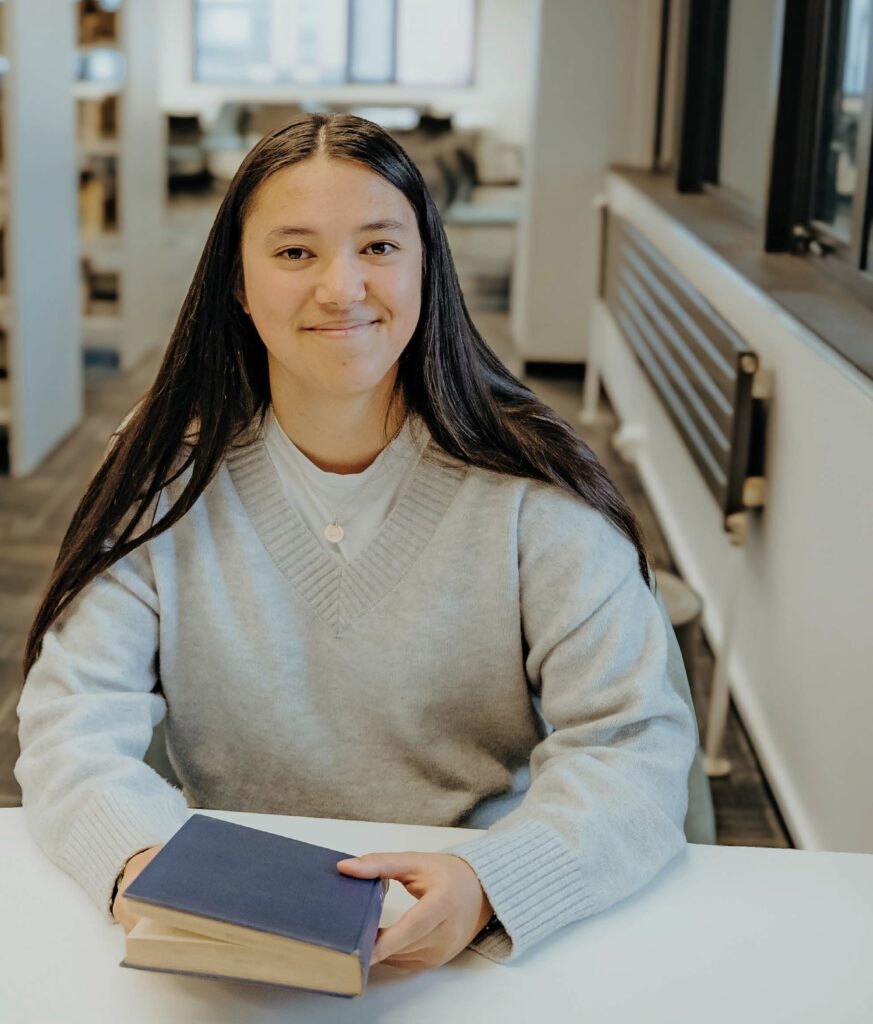
Eve’s mother, Nikki, is Thai, and the family returned to New Zealand when Eve was an infant. She received her first cochlear implant at 18 months, and at age 12 underwent surgery for her second implant. While bilateral implants are now standard for children, Eve’s experience reflects an earlier era of cochlear implant care.
Although Eve has spent most of her life in the hearing world, she attended preschool programmes at Van Ash Deaf Education Centre (now Ko Taku Reo) and took part in Deaf Games summer camps during her childhood.
Outside of study, Eve has a strong passion for cars — an interest not often stereotypically associated with young women. “I like going to exhibitions and shows,” she says with a smile.
Her love of cars began with her father Aaron’s interest in classic Morris Austins, while her partner Ben introduced her to the world of supercars. The couple met at high school in Christchurch.
That automotive interest led Eve to discover another passion: photography. “I started getting into photography when I got interested in cars,” she explains. She’s now considering adding a photography paper to her university studies as a creative outlet alongside psychology.
The transition from high school to university has been transformative. After spending her later high school years in Kerikeri, Eve returned to Christchurch — the city where she grew up — and enjoys being closer to Ben again.
University life has also brought a schedule better suited to managing the cognitive load that comes with listening through cochlear implants. “In high school, six-hour days were exhausting,” Eve reflects. “Now, having two or three lectures a day with breaks in between is much more manageable.”
A significant milestone was being awarded a Go Waitaha scholarship valued at $15,000, which has helped support both her studies and accommodation at Rochester and Rutherford Hall at UC.
Living in the halls has given Eve a strong sense of community. Early on, she found it important to clearly explain to new friends that she is profoundly Deaf and relies on cochlear implants. Being open helped others adapt their communication.
“I had to ask people to repeat themselves and speak clearly, especially when everyone talked over each other,” she recalls.
Eve’s decision to study psychology was influenced by her father, who studied psychology and worked in social work and counselling. She initially considered law and criminology but found the heavy legal language and competitive environment didn’t suit her learning style.
While she’s considering future paths — possibly clinical psychology or incorporating photography — Eve is content focusing on the present. “The independent side of university is what I love most,” she says. “Having more freedom in my choices.”
UC’s Accessibility Services team has played a crucial role in supporting her learning, particularly through AI transcription tools in large lecture theatres. “In lectures with 200 people, it can feel overwhelming,” Eve admits. “Being able to review transcripts later has been a huge help.”
Throughout her life, audiologist Shirley Marshall from the Southern Cochlear Implant Programme has been a constant source of support. “She’s been part of my life for so long,” Eve says warmly, “always making sure my implant settings are right and that I can hear clearly.”
That continuity of care has provided stability as Eve has grown from a toddler into a confident young adult.
While she misses her parents and pets in the Bay of Islands, Eve stays connected through FaceTime. Her journey continues to unfold — one carefully planned lecture, one car show, one photograph at a time — guided by independence and grounded in the support systems that helped shape her path.