Cathy’s life changed suddenly and without warning. Eighteen months ago, the Rolleston grandmother contracted bacterial meningitis and was admitted to hospital. She remained in a coma for eight weeks. When she woke, the world was profoundly different.
“By the time I came out of the coma, not only was I deaf, I was blind. I couldn’t open my eyes,” Cathy recalls.
Part of her brain had been damaged by the illness. Over time, her body slowly relearned some of what had been lost. She regained her sight. But her hearing did not return.
Cathy was transferred to Burwood Hospital for rehabilitation. At that point, she could not walk, and doctors were unsure if she ever would again. She was referred to the Southern Cochlear Implant Programme, though meningitis can make outcomes unpredictable.
“With meningitis, it’s very unknown,” she says. “That’s probably the worst you can get for hearing loss.”
A year ago, Cathy’s bilateral cochlear implants were switched on.
Adjusting to sudden deafness as an adult brought unexpected and sometimes confronting moments. Having never experienced hearing loss before, Cathy didn’t realise how loudly she was speaking.
“I thought I was speaking quietly,” she says. “In my job before, I was always told I was too quiet. But in hospital I was so loud they moved me right down the far end of the ward because I was speaking so loud.”
Throughout her recovery, Cathy’s family have been a constant source of strength. Her mum has been by her side at every appointment, while her husband, children and young granddaughter have helped motivate her through the challenges. When she was first discharged from hospital, a close friend, Dianne, also came to stay with her to help during those early weeks at home.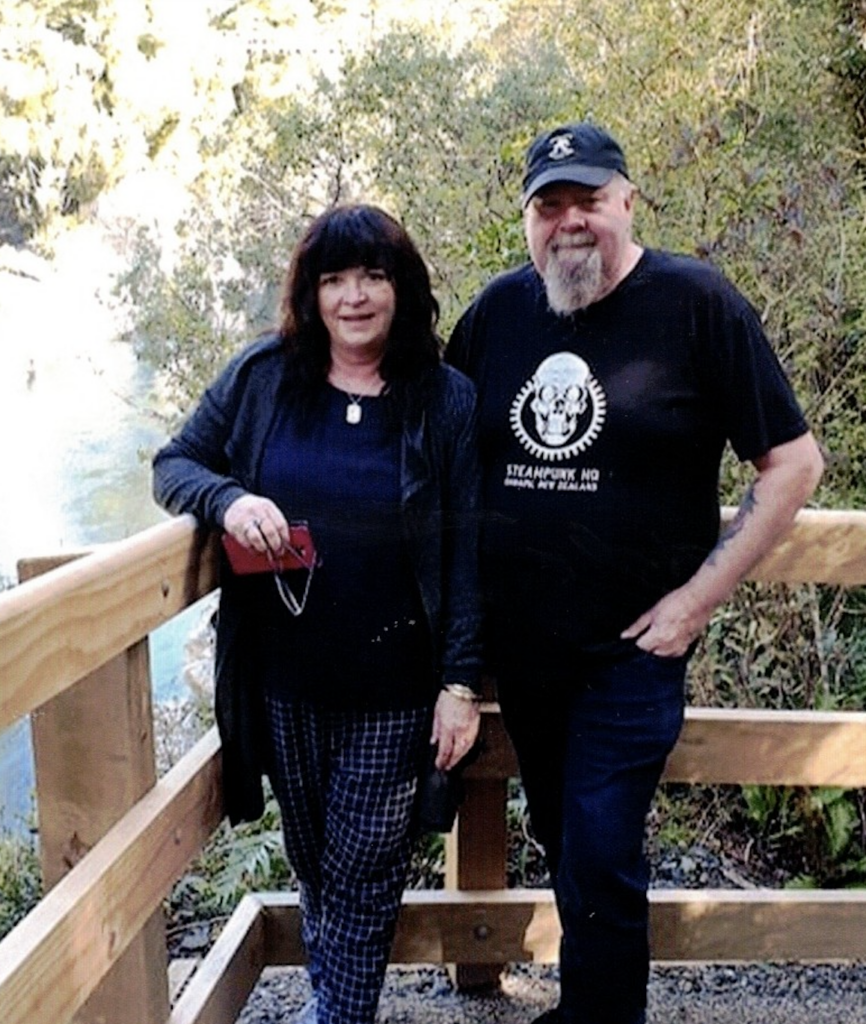
Before becoming ill, Cathy cared for her granddaughter every Tuesday. When she first returned home, her granddaughter was too young to understand what had happened.
“She was only one when I got sick,” Cathy says. “Now she’s two, and she points to my cochlear implant and says, ‘Ears, ears.’ And I say, ‘Yes, grandma’s ears.’”
Being able to hear her granddaughter’s voice again has been one of the most meaningful milestones.
“I can hear her laughing. I can hear her saying words like ‘no’. Before, I couldn’t hear anything. To hear her laugh — just things like that — it means everything.”
Cathy has worked hard to help her brain relearn how to interpret sound. She keeps her sound processor on throughout the day and surrounds herself with everyday noise.
“The only way your brain’s going to relearn how to hear is by lots of noise,” she says. “Keep the radio on, keep the TV on. Even when it feels overwhelming, you have to keep them on.”
Slowly, the sounds of the world have returned — including ones she had never fully appreciated before.
“When I walk out to the letterbox, I’m almost overwhelmed by the birds,” she says. “I didn’t realise how loud they were. I never really listened to that before.”
Her recovery has been remarkable in other ways too. When Cathy first arrived at SCIP, she was in a wheelchair. Today, she walks with a stick.
“They told my family that if I did survive, I wouldn’t have any quality of life and I would never walk,” she says. “So I’ve got so much to be grateful for.”
Before her illness, Cathy had worked at New Zealand Post for more than 20 years, rising to a team leader position. Her colleagues rallied around her during her recovery, visiting her in hospital and keeping her job open. Although she was later medically retired due to the physical demands of the role, she remains deeply grateful for their support.
Adjusting to a different pace of life has not always been easy, but Cathy has found new meaning in family, creative pursuits, and her ongoing rehabilitation.
She is also passionate about encouraging others who may be considering cochlear implants.
“You’ve got nothing to lose and everything to gain,” she says. “It’s very isolating when you’re deaf. The cochlear implant gives you a lifeline.”
Cathy says the team at the Southern Cochlear Implant Programme have been central to her recovery.
“Everyone here has been wonderful. They’ve answered all my questions and helped me with everything,” she says. “What I’ve lost in one way, I’ve gained in another.”
Today, Cathy continues to make progress every day — supported by her family, her determination, and the technology that has helped reconnect her with the sounds of life.
“If it wasn’t for the implant,” she says, “I don’t know where I’d be.”