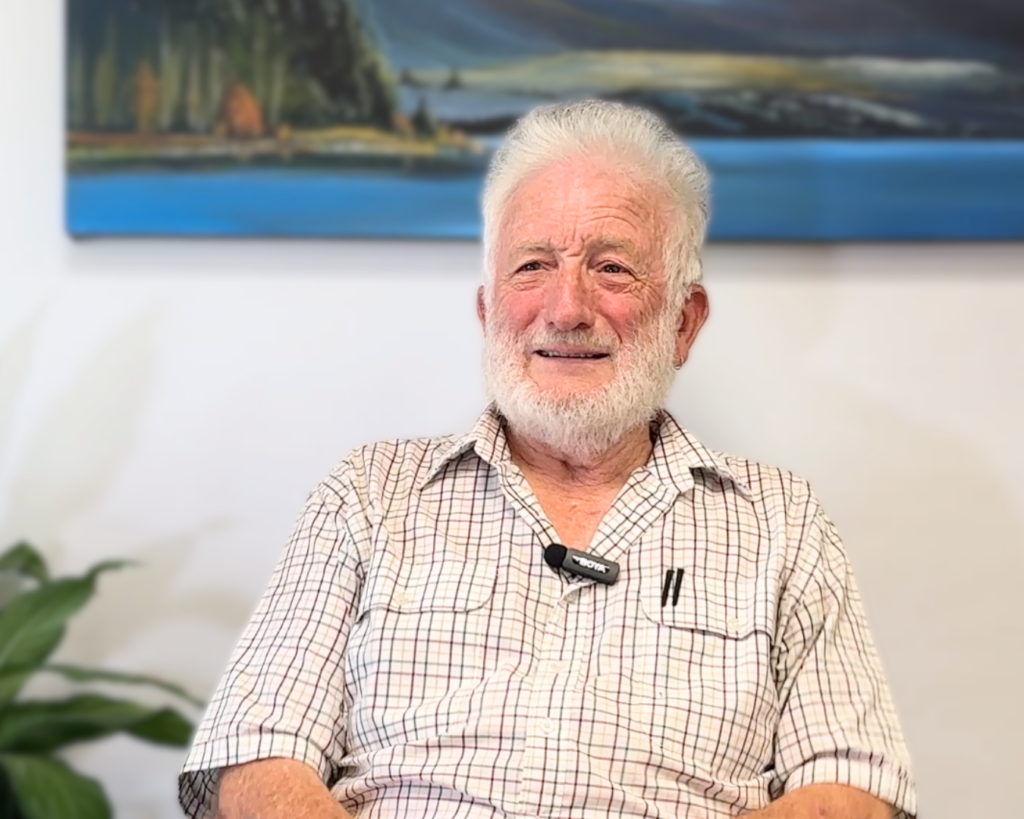
Dave has navigated life with limited hearing since childhood, but cochlear implants have transformed how he connects with the world around him.
His limited hearing was first noticed when he was 10 years old, after a teacher realised he hadn’t responded when spoken to from behind. That moment led to a hearing test, and it marked the beginning of a gradual decline that would shape much of his life.
By 12, Dave received his first hearing aid. From there, it became a steady progression—more powerful devices, constant adjustments, and ongoing challenges with feedback and background noise. Like many people with progressive hearing loss, he learned to cope.
“There were no accommodations in those days,” Dave says. “You just got on with it.”
And he did. Dave went on to complete an apprenticeship as a boilermaker welder— the loud, industrial environment only added to the strain.
Outside of work, Dave’s world was just as noisy. In the 1960s, he became involved in motorcycle racing, long before noise regulations existed. Open exhausts, roaring engines, and high-speed competition were all part of the scene.
“I coped,” he says simply.
Over time, Dave joined what was then the Ministry of Works, working in the National Hydrology section—later part of NIWA—where he serviced and calibrated instruments used to measure water velocity in rivers and the sea.
At first, the role involved little interaction with others, something that suited his hearing limitations. But as technology evolved, so did his role.
Eventually, he began training others—first locally, then internationally. It was a shift that would have once seemed unlikely, given how much he had struggled to hear.
Dave had been following the development of cochlear implant technology since the 1980s. The idea fascinated him, and he always thought that one day, when the technology was ready, he would take that step.
When he met his first wife Liz, one of the things that drew him to her was her voice.
“She had a beautiful, clear voice,” Dave says. “I could understand her when I couldn’t understand other people.”
In social situations, Liz became a source of support. If Dave missed something in conversation, she would fill in the gaps—helping him stay connected.
Then came the news that changed everything.
When Liz was diagnosed with cancer, Dave made the decision to go ahead with a cochlear implant. He knew his hearing had deteriorated to the point where hearing aids were no longer enough. He was struggling at work, particularly with using the phone, and his employer had begun encouraging him to consider a disability pension.
But the path to surgery wasn’t straightforward. Due to a misunderstanding, his original operation date was cancelled without his knowledge. It took his sister stepping in to rearrange everything, securing a new date: August 6, 1996.
That date would stay with Dave forever. It was the day he received his first cochlear implant—and the day Liz passed away.
“It was pretty hard,” he says. “I had really hoped she would live to see what happened. She would have loved it.”
In the midst of grief, something remarkable happened.
From the moment his cochlear implant was switched on, Dave’s brain adapted almost instantly. On that very first day, while out with his brother, he picked up a phone and had a conversation with his sisters — something his rehabilitationists had expected would take time and training.
“For me, it just clicked,” he says. “Everything worked straight away.”
Back home, the world began to fill with new sounds. One moment in particular stands out—the soft clicking of his dog’s toenails on the kitchen floor, a sound he had never heard before.
“We used to call them ‘cochlear implant moments”, he says.
The impact on his working life was immediate and profound. Where he had once been on the verge of leaving the workforce, he began taking on more responsibility, working directly with people, and stepping into training roles.
“I started getting other jobs, doing different things, and then I was promoted several times,” he says.
For around 15 years, his first cochlear implant served him well. But over time, issues with the electrodes began to affect its performance. Still needing strong, reliable hearing for both work and daily life, Dave chose to get a second cochlear implant in his other ear in 2013.
Individually, each ear had its limitations. Together, they were extraordinary.
“It’s like everything just comes together,” he says. “The difference is incredible.”
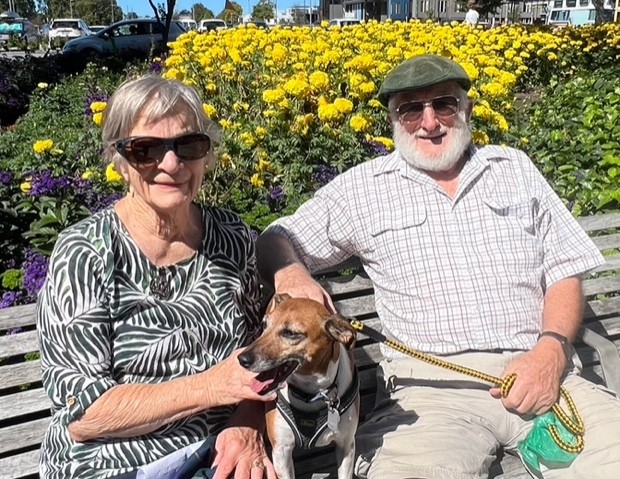
These days, Dave shares life with his wife Nancy, who is also profoundly deaf and is a cochlear implant user. Their shared experience brings a deep level of understanding—of what it means to lose sound, and what it means to find it again.
Together, they stay active and connected. Dave continues to enjoy social activities, including Scottish country dancing several times a week—something he believes he would never have done without his cochlear implants.
Music, too, has become an important part of his life. After his first switch-on, he made a point of listening to every record, tape, and CD in the house—rediscovering old favourites and experiencing them in an entirely new way.
Through it all, Dave remains clear in his advice.
“If you’re deaf and someone suggests a cochlear implant,” he says, “grab it with both hands.”
For him, the transformation has been nothing short of life changing.
“It’s like being born again.”