David was born with a severe to profound hearing level difference. Growing up, he made a conscious decision to remain in mainstream education, alongside his two sisters, who also had hearing differences.
“We just had an expectation we would do things the same as everyone else,” he explains.
Without the support of hearing aids in his early years, David developed a set of adaptive skills — learning to observe closely, lip read, and actively seek out information when he missed something.
“Learning to lip read was really critical… and also making sure we found out information if we hadn’t heard it.”
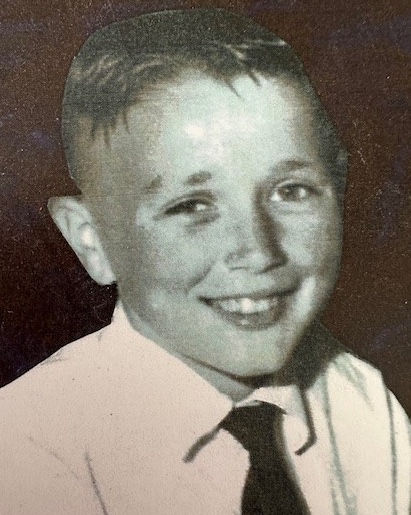
David as a young boy
While this approach helped him successfully move through primary school, secondary school, and university, it came at a cost. Like many people with hearing differences, David became used to working harder to keep up—constantly filling in gaps and piecing together meaning from context.
It wasn’t until later in life that hearing aids became powerful enough to support him more effectively. But even then, his hearing continued to change.
“Just before I had my implant, my left ear’s hearing deteriorated even further and I couldn’t hear speech.”
Although David had previously explored the idea of a cochlear implant, he initially decided against it.
“I thought it was too invasive. I thought it would change my lifestyle too much.”
But when hearing aids were no longer enough—particularly in a demanding role within the Ministry of Education—David had to reconsider.
“I just could not do my job without that. And so I decided it was worthwhile looking into it.”
Going ahead with a cochlear implant proved to be transformative—but not always in predictable ways.
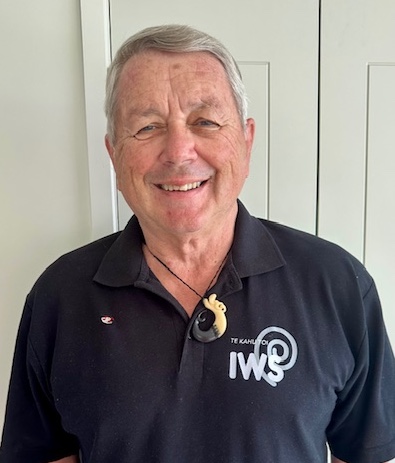
“The first thing was hearing sounds I’d never heard before.”
For the first time, David was exposed to high-frequency sounds that had previously been completely inaccessible. However, those sounds did not immediately translate into meaning.
“Hearing a seagull and not knowing what it was… and I’m a sailor, so I’ve heard seagulls millions of times.”
His brain had to relearn how to interpret sound. Everyday environments became unfamiliar again—filled with noises that were newly intense or difficult to process.
“Hearing my noisy grandchildren… to the extent I needed to walk out and have a break because it was so loud.”
At first, the richness of sound could be overwhelming. But gradually, that same intensity shifted into something far more meaningful.
“Listening to my grandchildren sing and hearing them like I’ve never heard them before.”
For David, one of the most profound changes was not just hearing sound again—but how it changed his ability to connect with people around him.
“I used to think it was okay if I didn’t hear things and I could run around and catch up,” he says.
“But what I realised… is how important it is to hear the stuff in the moment and being able to contribute.”
For years, he believed he was managing well enough. But with hindsight, he recognises how much effort that “coping” actually required—not only from him, but also from those around him.
“If you can’t hear, you tend to think… maybe I won’t make a comment here because I may have got it wrong.”
Now, that hesitation has been replaced by confidence and immediacy.
“I can be more confident… and engage more fully. You think you’re okay… but it makes such a colossal difference to the way you interact.”
This shift has had a significant emotional impact as well. No longer needing to constantly guess or reconstruct conversations has reduced the cognitive strain he once lived with daily.
“I don’t try and guess what people have said. I can actually hear it.”
Others around him noticed the difference too.
“People say, ‘you look much more relaxed…’ and that’s largely to do with being able to hear a greater range of things and not have to concentrate so hard or miss out.”
He also describes the adjustment period after implantation as one of both challenge and recovery.
“Initially, you get exhausted from the increased stimulation, but as you get used to it, you’re not straining as much, so you have more energy. I went from feeling really tired after the implant to now feeling much more relaxed.”
While the benefits have been life-changing, David is also honest about the practical challenges that come with relying on hearing technology—particularly when it is removed.
“It’s a challenge when you take the implant off… you can’t hear.”
This creates everyday safety considerations that many people would not normally think about. Simple household tasks—like hearing running water, movement in the home, or alarms—require new systems and habits.
For David, safety became something that needed to be actively designed into daily life.
“For example, the smoke alarm—having to change that to a vibrating one so you can hear it. I needed to make sure that I had a system if there was a fire in the house.”
These changes became even more significant following the passing of his wife, when he found himself living independently and fully responsible for ensuring his own safety systems were in place.
Despite these challenges, David describes the overall experience as overwhelmingly positive, supported by both technology and people.
“The Southern Cochlear Implant team are outstanding. Nothing seems to be too difficult, no question too small.”
His family has also played an important role throughout his journey, attending appointments and learning alongside him to better understand his experience.
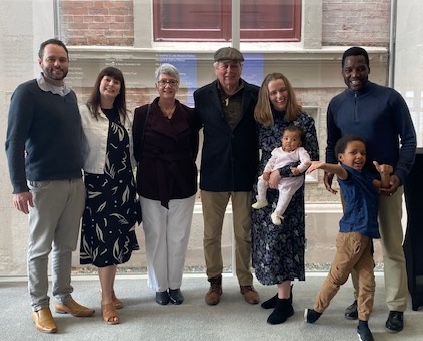
David and his family
“It’s been a family decision… and the family have felt really supported.”
Reflecting on his journey, David is clear about one thing he would change.
“Get it done much earlier.”
Today, David continues to make a meaningful contribution to his community—recently he was appointed a Member of the New Zealand Order of Merit for services to education.
The honour acknowledges decades of work focused on improving equity and access for children across Aotearoa New Zealand.
Thanks to his lived experience, David has long been an advocate for inclusive education, particularly ensuring disabled children can learn alongside their peers in their local schools.
Alongside his training as a teacher and psychologist, he co-founded the Rainbow Reading programme with his wife, donating more than 100,000 books to low-decile schools across New Zealand and the Pacific to support literacy development.
His wider work has included helping establish Whakatū Kōhanga and whānau classes in Nelson, serving 20 years on the New Zealand Psychologists Board, and contributing to initiatives supporting rural training for female psychologists. He also helped develop Māori cultural advisory guidelines for the Family Court and established the Ministry of Education’s Intensive Wraparound Service, Te Kahu Tōī, which continues to support more than 600 tamariki each year.
“I was really humbled and surprised,” he says of receiving the award.
For David, the recognition carries meaning beyond personal achievement. It highlights the importance of acknowledging people who contribute to their communities while living with disability.
“What’s amazed me most is how important it is to recognise people… working in that area with a disability. It’s a real honour, and receiving letters from leaders and others shows that people do care—regardless of hearing differences. It’s a really good feeling to have that support.”