When newborn screening flagged concerns for Anna and Ryno Huyser’s son Evan, it was unexpected. With no history of deafness in either family, this was new territory for the Huysers.
The medical team suggested it could simply be fluids from Anna’s C-section. Further testing at Christchurch Hospital confirmed significant hearing difference. Genetic testing later revealed that both parents were carriers of a gene neither family knew existed.
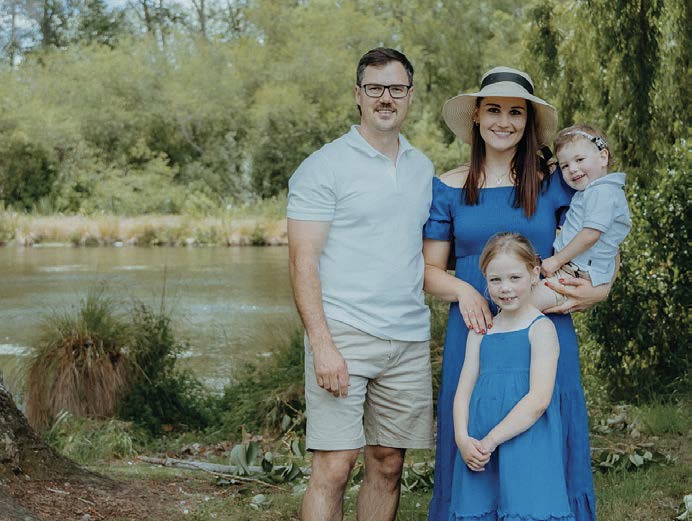
Anna, an early childhood education teacher, remembers the initial period of adjustment and information gathering.
“It was a big shock when we found out he was born deaf,” she says. “But it was nice to get confirmation and to know the why.”
At three months old, Evan was fitted with hearing aids. While they provided some benefit, his audiological profile meant he struggled to distinguish between similar sounds – he might hear ball and fall as the same word.
Understanding the impact this could have on his language development, Anna and Ryno made the decision to pursue bilateral cochlear implants when Evan was six months old.
The decision was supported through an unexpected connection. Alicia, a South African mother whose son also has cochlear implants and who runs a business making headbands and accessories for cochlear implant users, became a vital source of support and information through online chats.
“She’s a very positive person. She actually gave me the peace of mind just to do it,” says Ryno, who drives a milk tanker truck for Hilton Haulage.
At six months old, Evan underwent bilateral cochlear implant surgery. The operation took about four hours, with two hours dedicated to each ear. The theatre team called Anna and Ryno after completing the first ear to reassure them everything was going well before moving on to the second.
“It’s especially major surgery on a small child like that,” says Ryno. “But they took us through all the steps and how they do it. It was really easy to just let them do what they have to do.”
At Evan’s switch-on appointment, the moment his processors were activated he simply smiled. Having had some hearing with his hearing aids, the sound was now clearer – a gentle transition rather than a dramatic revelation.
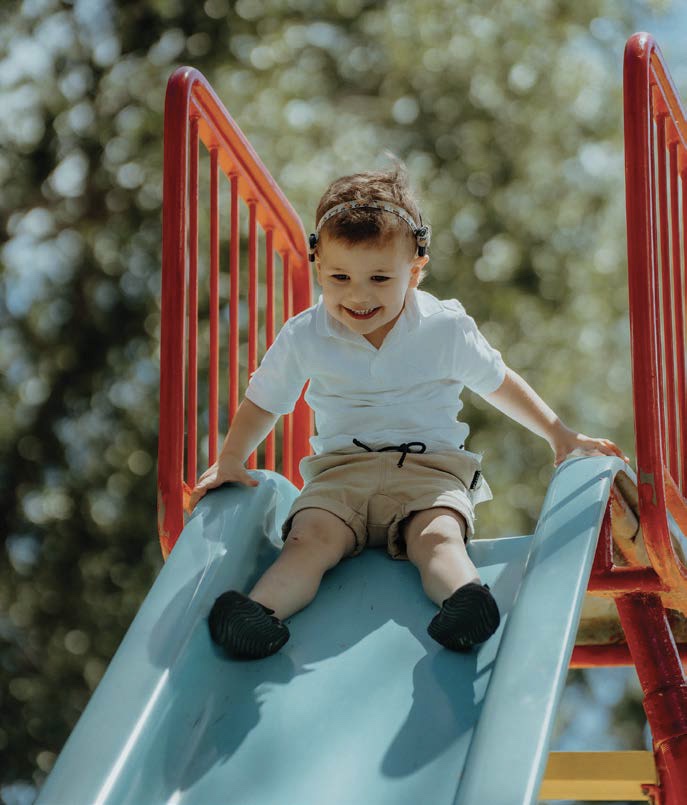
Now two years old, Evan is thriving. He calls his cochlear implants “his ears” and has embraced them completely.
Each morning, he brings them to his parents to put on, and he’s even learned to reattach them himself when they fall off during play.
His language development has progressed well with the support of the Southern Cochlear Implant Programme (SCIP) team.
“They are so impressed with him. He’s almost in front of his peers with his speech,” Anna shares.
Evan is also comfortable choosing when to wear his processors.
“Some days he comes down and sits in front of the TV just not wearing them,” says Ryno.
Anna believes Evan particularly enjoys bath time without them. “He associates the bath with silence; his time to relax.”
The Springston toddler is a typical busy boy who loves trucks, playing outside, dancing to music, and swimming at the aquatic centre – where he can now wear a special aqua kit to keep his processors on in the water.
Ryno says that his older sister Mia, aged six, is protective and caring, helping to put his processors back on when needed.
“She’s a good big sister, very caring, very protective of him.”
The support from SCIP has been invaluable throughout the journey, the Huysers say. Regular visits from speech therapists, sign language instruction at home, and quick assistance when equipment needs replacing have given the family confidence.
“The support we had after the operation was exceptional. We were so happy,” Ryno says.
The Huysers’ message is clear: don’t hesitate.
“Just giving a child the opportunity – it’s not something you need to second guess or doubt. The technology is there. Why not use it?” says Ryno.
Anna adds: “SCIP will be with you every step of the journey. It was scary in the beginning because it’s the unknown. But if I think back now, I’d do it again. Definitely. It’s worth it – that chance for him to hear sounds and have speech.”
Through sharing their story, the Huysers hope to help other families understand one family’s positive experience with cochlear implants and the support available.