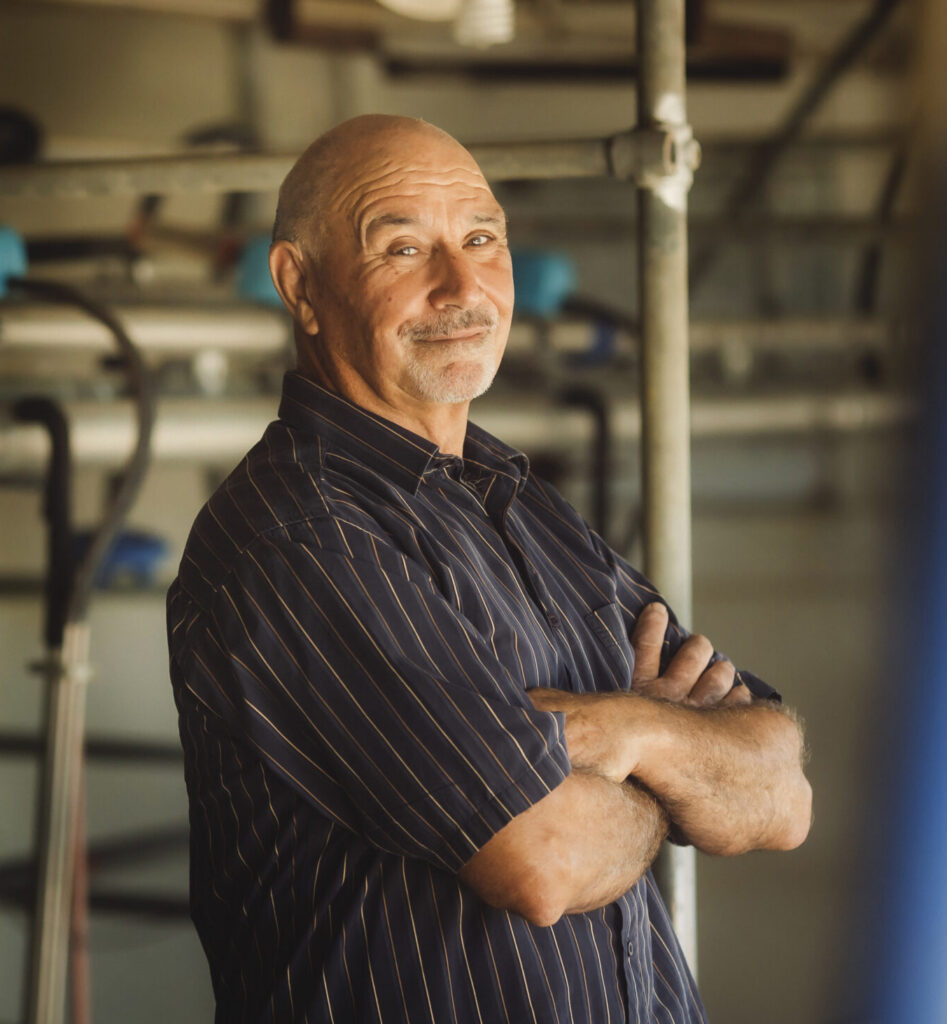
“It just feels like I’ve had it forever,” Murray Beck says about his cochlear implant, five years after surgery. “It’s only when I take it off that I think, ‘Oh, this ain’t so good.’ It’s definitely been a game changer.”
Today, the 69-year-old Taranaki dairy farmer whistles while milking his 55 cows, chats easily and enjoys lively car conversations with his wife Julie. But five years ago, Murray’s world was increasingly silent.
After 17 years as a manager in the oil and gas industry in the Middle East, Murray’s hearing had deteriorated severely. By the time he returned to full-time farming in 2016, simple interactions had become ordeals.
“He wouldn’t go anywhere when I was at work,” Julie recalls.
Murray carried $50 notes to the supermarket because he couldn’t hear cashiers. He’d avoid conversations to prevent the embarrassment of answering wrong. His grandchildren would yell in his ear, but he still couldn’t understand them.
A hearing assessment revealed the devastating truth: Murray could understand only 4% of single words without visual cues.
“I cried,” Julie admits. “I had no idea how bad it was. He was missing so much.”
Watching television programmes became a frustrating ritual of pausing and explaining what was said. Car journeys were silent because Murray would dangerously turn to lipread while driving.
Exhausted from constantly trying to decode facial expressions and lip movements, Murray would fall asleep whenever he sat down.
“He was afraid to live life because he was afraid he was going to get it wrong,” Julie says.
Meeting Nikki Cleine from the Southern Cochlear Implant Programme (SCIP) changed everything.
As someone with a hearing difference herself, Nikki understood Murray’s experience. Her description resonated: profound hearing difference is like being in a motel room with thin walls – you know people are talking next door but can’t make out the words.
Seeing another cochlear implant recipient confidently talking at a crowded funeral showed Murray what was possible.
Funding the surgery themselves was the best $60,000 I ever spent, Murray says.
The day after his switch-on, he attended another funeral and, despite the sadness of the gathering, he couldn’t stop smiling as he could hear everything.
Five years on, the transformation touches every aspect of life.
His grandchildren – now 18, 15, and 12 – talk easily with their grandad. Car rides overflow with conversation. Murray hears air leaks in his milking plant and the wash-down pump running, preventing costly repairs.
His iPhone streams directly to his processor, turning dreaded phone calls into a pleasure, he says.
Farm life has brought amusing moments. Murray wears a hat to prevent curious cows from licking his processor off his head. Once, he wondered why everything went silent while working on the tractor – the processor’s magnet had attached to the metal shed.
“Not as many arguments,” Murray laughs, referring to misunderstandings when Julie would ask for something from another room. The whole family had to learn to speak more quietly after years of raised voices.
Perhaps the most profound change is the return of Murray’s true personality. From a musical family with a great singing voice, he’d stopped whistling because he couldn’t hear himself.
“Music came back,” Julie says emotionally. “He whistles all the time. You can tell if he’s had a good milking because he’s whistling or singing.”
With a ‘Resound’ hearing aid in his other ear that pairs with his cochlear implant, music he loves – like The Eagles – sounds like actual music again, streaming to both ears simultaneously.
“He’s back to who he used to be,” Julie reflects. “He’s always been cheeky with a wicked sense of humour. A lot of that disappeared because he feared getting it wrong. He’s back to that person now.”
Murray puts on his processor at 5:30am and wears it all day. The couple has a sweet evening ritual: Murray stands ready for his shower and checks with Julie, “Is the conversation over now?” Only then does the processor come off.
“I don’t really think about BC – Before Cochlear – anymore,” Murray says.
“This is just how life is, and it’s good.”
Making the most of your cochlear implant
After five years with his cochlear implant, Taranaki dairy farmer Murray Beck has learned valuable lessons about maximising success. Here are some practical tips from Murray and his wife Julie.
Before getting his cochlear implant, Murray’s hearing assessment revealed he could only understand 4% of single words without visual cues.
“I had no idea how bad it was until I saw that test,” Julie admits. “Hearing tests with beeps don’t tell you what you lose in speech. That’s what the world is about – talking to each other.”
The importance of rehabilitation homework
The rehabilitationists at the Southern Cochlear Implant Programme were impressed with how quickly Murray adapted – but it wasn’t magic, it was work.
Murray credits much of his success to diligently completing his rehabilitation exercises. “I’d read articles from the newspaper aloud and Murray had to repeat what he heard,” Julie explains. “We’d do it at night and weekends – 20 minutes at a time.”
The exercises helped Murray’s brain relearn how to process sound. “To me, everything sounded like ‘cat’ or ‘fish’ at first,” Murray explains. “But doing all those individual words and exercises, it all came together.”
Murray’s advice is straightforward: “Do the homework. Work with your partner or family member. Practice listening, do the exercises. That’s how you get the best results.”
Keep sessions short but consistent – around 20 minutes – and be patient. Sounds will seem strange at first but improve with practice. The whole Beck family also had to adjust, learning to speak more quietly after years of raising their voices.
Pairing with a hearing aid
For those with some residual hearing in the other ear, pairing a cochlear implant with a compatible hearing aid can significantly improve the listening experience, especially for music.
Murray uses a Resound hearing aid that pairs seamlessly with his cochlear implant.
“Music that I know and love – like the Eagles – now sounds like music again,” he says.
Technology integration
Murray’s processor connects directly to his iPhone, streaming phone calls straight to his ear. This transformed phone calls from something he avoided “like the plague” to easy, pleasant conversations.
“I’d see the phone ringing and wouldn’t answer it,” Murray recalls. “Now I just pick up – even unknown numbers.”
Many TV channels now offer subtitles, which the Becks keep on for a complete experience.
Don’t delay getting assessed
The Becks’ strongest advice is not to delay getting assessed.
“Murray could have had one 10 years before, but nobody ever offered it as an option,” Julie says.
She emphasises asking audiologists specifically about cochlear implants.
“Hearing aids amplify what you’ve got left. Murray had very little left.”
The Becks chose to pay for Murray’s surgery themselves rather than wait for funding.
“It was the best $60,000 I ever spent,” he says emphatically. “If they can get the money, just go and get it done.”
Murray is no longer exhausted from trying to decode conversations or afraid of social situations. His cheeky personality, sense of humour and whistling have returned.
Murray puts on his processor at 5:30AM and doesn’t think twice about it.
His message is direct: “If someone’s really deaf and knows about it, just go and get a cochlear implant. Life’s too short.