From becoming one of Australia’s first deaf university graduates to one of the first deaf women in Australia to complete a parachute jump to circumnavigating Australia by boat — Nancy Gibb has achieved more in one lifetime than most people could imagine, all while navigating severe hearing challenges.
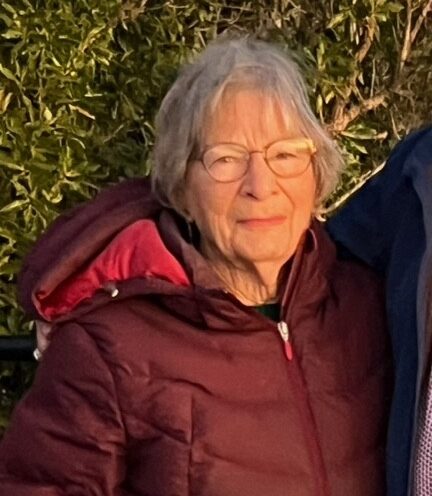
Born in Sydney in 1940, Nancy lost her hearing at the age of six after contracting cerebrospinal meningitis.
“I was only six and don’t remember very much,” she says. “I was told years later that I was in a coma for a while with cerebrospinal meningitis and the doctors couldn’t clear the blockage via the usual route of lumbar puncture, so resorted to another route through a hole in my skull.”
While she remembers little about the illness itself, Nancy vividly recalls the challenges that followed.
“I do remember being taken to lipreading lessons frequently and I found them very boring, just wanted to go outside and play,” she says.
At the time, attitudes towards deafness were very different. Nancy’s local primary school refused to take her back after she lost her hearing, and her mother was advised to apply for an invalid pension and keep her at home.
Thankfully, her mother had other ideas.
“She was indefatigable in ensuring I participated in life in general,” Nancy says. “She encouraged me to be independent from a young age.”
Instead, after a short and isolating stint at the NSW Deaf and Dumb Institute as it was known at the time (now NextSense), Nancy’s parents enrolled her in a small private girls’ school.
“I do not remember ever being given any special treatment, teachers did not single me out – it was sort of a sink or swim situation in which I thrived and which has always stood me in good stead, especially when I eventually went to University.”
Growing up before cochlear implants, captioning and transcription apps, Nancy relied heavily on lipreading and visual communication and the occasional fingerspelling from her dad. Her mother would ‘write’ words on the palm of her hand.
Despite the barriers she faced, Nancy had ambitious goals from a young age. She desperately wanted to become a veterinarian but was rejected by the University of Sydney.
“Impossible, too dangerous,” she recalls being told. “Wouldn’t hear large animals, no stethoscope use.”
-
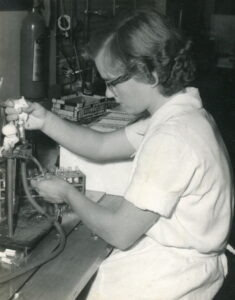
- Nancy at her first job.
-
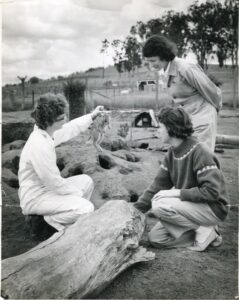
- Field work
-
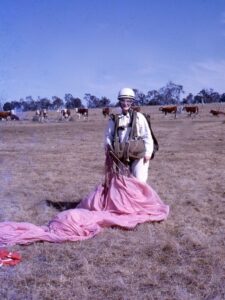
- A successful landing on Nancy’s first sky dive
Instead, she pursued science through the newly established University of New South Wales while also working in a scientific laboratory and attending night classes to complete prerequisite subjects.
“Almost nobody including my schoolteachers thought I could do it,” she says. “But the University of NSW people were encouraging. My mother was tireless.”
Nancy worked four-and-a-half days a week in a scientific laboratory while studying Physics, Chemistry and Mathematics at night school, alongside beginning university biology papers.
The hard work paid off.
Nancy became the first completely deaf Australian woman to gain a university degree, graduating with a Bachelor of Science in 1962 before later completing a Masters in Animal Genetics at the University of New England.
University life came with significant challenges, particularly in lectures and group settings and Nancy often relied on self-directed study.
“I was a bit lonely at times,” she says. “But the other students accepted me and were happy to let me copy their lecture notes.”
“I’d then go to the library and try to find out more about whatever had been discussed that day.”
Following university, Nancy went on to build an extraordinary career in medical research, working with organisations including CSIRO, St Vincent’s Hospital, the Garvan Institute, Royal Brisbane Hospital and the University of Queensland. All without interpreters, captioning, workplace accommodations or communication support.
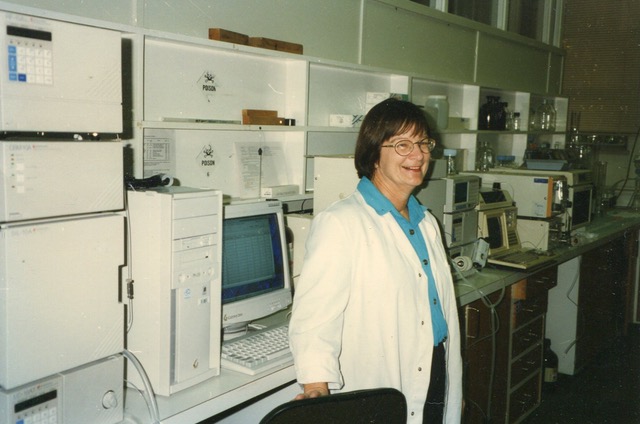 Nancy is grateful for the kindness of friends who helped fill in the details of the hearing world around her, and helped bridge the communication gaps that others often overlooked.
“Some special, considerate friends often told me quietly what they were hearing — noises in the background, someone talking too loud, gossip at work and so on,” Nancy says. “Just little things that made me more aware of the environment and what was going on.”
She particularly remembers a colleague from her first laboratory job and a close friend she travelled overseas with in her younger years.
“We spent three months with six other Aussie and Kiwi travellers touring Europe, hitchhiked up to the Orkney Islands in northern Scotland and had all sorts of adventures,” she says. “I remember my friend telling me our Scottish hosts’ little boy was talking about his ‘wee britches’ — things like that.”
Those small acts of inclusion helped Nancy stay connected to the world around her long before hearing technology offered additional support.
Alongside her career came a remarkable sense of adventure.
In 1963, Nancy was possibly the first deaf woman in Australia to complete a parachute jump. Later, together with her first husband Geoff Hoffmann, she bought and restored a former Broome pearling lugger – a large wooden sailing boat that was traditionally used to harvest pearl oysters and mother-of-pearl in Broome, Western Australia.
The couple later circumnavigated Australia with their young daughter Nicole between 1980 and 1981.
“My husband was fully hearing,” Nancy says. “We did have a series of home signs when sailing, especially as I had to work the engine. Occasionally he would write, especially if annoyed about something and wanting to make sure I understood.”
“When our little daughter aged 3-4 was angry she would grab a bit of paper and scribble on it and then present it to me.”
Tragedy struck in 1983 when Geoff died from melanoma, leaving Nancy to raise Nicole alone while continuing her scientific career.
When asked what she is most proud of when looking back on her hearing journey, Nancy says, “surviving in a hearing world. Completing University. Raising a daughter alone. Doing lots of things some people are afraid to do – with the exception of bungee jumping.”
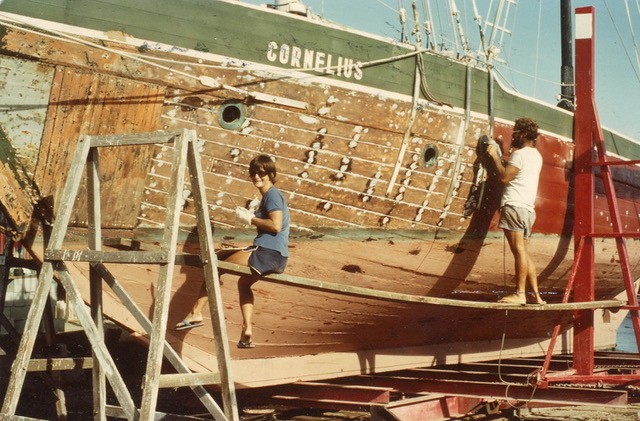
Working on the old Broome lugger
By the late 1980s, Nancy had also become heavily involved in advocacy work around captioning access, communication technology and relay services in Australia, helping pave the way for many of the accessibility services deaf and hard of hearing people rely on today.
Around the same time, she began considering something she had once thought impossible: a cochlear implant.
“In about 1980 I saw a magazine article about CIs,” she says. “It said they were unsuitable if there was ‘nerve damage’ and as I’d always been told I had nerve damage I thought – what a marvellous invention but not for me.”
Years later, while researching technology for deaf people, Nancy contacted Professor Bill Gibson in Sydney with questions about cochlear implants.
“I shall never forget the day a letter came back saying actually I was indeed a candidate for an implant.”
Nancy received her cochlear implant in 1988 after more than four decades of deafness.
Her expectations were modest.
“Very low – probably environmental sound only – which proved correct,” she says. “Basically, I had nothing to lose.”
Her first experiences with sound were overwhelming.
“One continual headache!” she says. “Mainly because in my eagerness I took ‘comfort level’ to mean the highest bearable level.”
Still, there were moments of joy and discovery.
“I walked around the hospital grounds trying to hear the sound of leaves rustling under my feet,” she says.
Over time, Nancy came to appreciate many sounds she had never experienced before.
“Birds, drums, music with a distinctive beat, waves on a beach, rain on a roof,” she says. “Rain on a roof was the first sound I identified with no visual clue.”
While speech understanding has remained limited, the cochlear implant has still had a meaningful impact on her life including “increased environmental awareness,” she says. “Conversation is also easier and my voice much improved.”
-
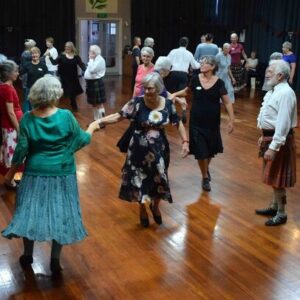
- Scottish country dancing at Nancy’s 85th birthday
-

- Nancy and her husband Dave
Her advice to others considering a cochlear implant is simple.
“Go for it,” she says. “Don’t be dismayed by all the horrid noises at first — or the silly stories about brain operations and the like.”
Now living in Christchurch with her husband Dave, who also has cochlear implants, Nancy continues to embrace life with the same determination and curiosity that has defined her journey from the beginning.
At 86 she remains a traveler, author, genealogist and Scottish country dancer — still proving, as she always has, that deafness was never going to define the limits of her life.
You can read more about Nancy’s adventures via her blog nancyvada.me