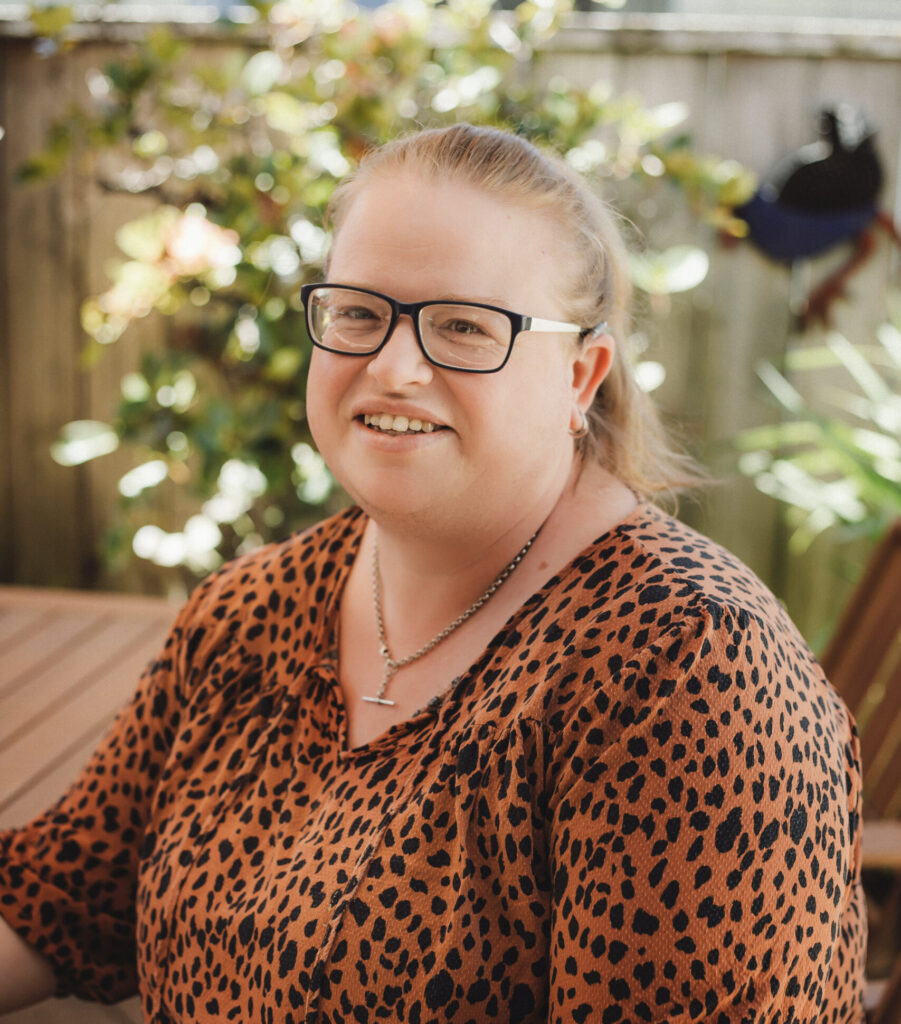
Nicole Berry has worked at Puke Ariki – New Plymouth’s library, museum and information centre – for 20 years. She loves crafting, runs adult craft nights through the library and is currently expecting her first child with fiancé Beren.
She also has Usher Syndrome, wears a cochlear implant in her left ear and a hearing aid in her right. She is not, she will tell you plainly, defined by any of it.
“It’s all just normal to me,” says Nicole, now 38. “I don’t know any difference. I just have a new piece of technology that makes hearing a bit easier.”
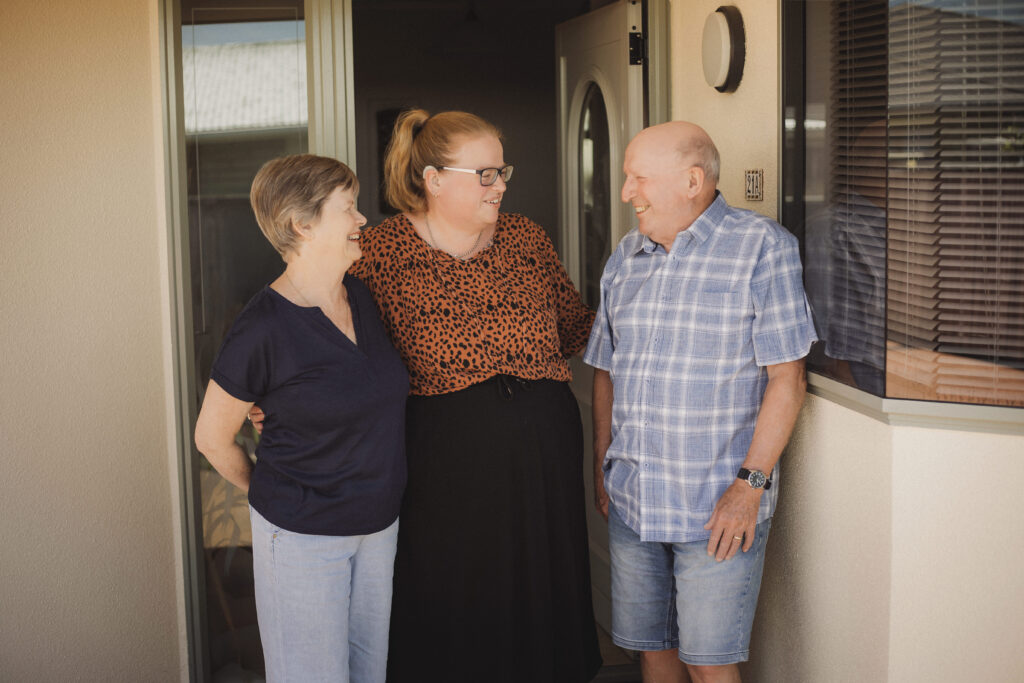
Nicole was born with hearing loss, sharing Usher Syndrome with her mother Maree, who also has a cochlear implant. Her father Richard has one too.
Growing up watching her mother navigate hearing difference – and eventually embrace an implant – gave Nicole some reassurance when her own audiologist recommended the same path as her hearing continued to decline.
But it was the clinical recommendation that was the deciding factor for Nicole.
Her biggest concern was the surgery itself in June 2022.
“I had never had surgery before, never been in hospital. It was major surgery. That was my biggest worry.”
Once through it, though, she was back at work within three to four weeks of switch-on and immediately began encountering sounds she had never noticed before.
“Who knew the buttons on the Eftpos machine made a noise?” she laughs. “Why do I want to hear that?”
One thing Nicole wants people to understand is that cochlear implant users don’t simply hear less – they often hear more than people realise, and without the same filtering that hearing people take for granted.
“I think people forget we hear surround sound,” she explains. “We hear everything. For a normal hearing person, their brain is trained to block out background noise. Whereas we hear that.”
The sensory load adds up. Nicole and her mother Maree have both reflected on how much unacknowledged effort goes into lip reading alongside the implant.
“Some days your eyes get tired, your ears get tired, your brain gets tired.”
Not all sounds are welcome, either.
“There are sounds I hate. I can’t stand birds. I’d never heard them before,” Nicole says.
Puke Ariki is a busy, public-facing environment, and Nicole has encountered her share of ignorance and frustration at work over the years in her interactions with the public. She now wears a hearing-impaired badge each day, a practical step she has come to appreciate.
“I’d rather people come up and ask me about my cochlear implant than just be ignorant,” she says.
The badge has also opened unexpected conversations. Families with newly implanted children sometimes seek her out.
“I’m able to tell them my story and I think that’s pretty cool.”
The year after receiving her implant, Nicole went on a cruise and used an aqua kit for the first time – the waterproof technology that meant she could wear her processor in the spa pool and talk with people.
At home, she has embraced assistive technology broadly.
Her bedside system connects to the smoke alarm, doorbell and soon a baby monitor – with different vibration patterns to distinguish each alert. She is matter of fact about it.
“I just think it’s cool that it’s available.”
Nicole and Beren are preparing for a new chapter and she is thinking practically, as she always does, about what it will mean to be a deaf parent with the right technology in place.
For Nicole, the implant is not a cure, a limitation or a statement. It’s just part of how she moves through a full and busy life – at the library, in the craft room, on a cruise ship, and soon, with a baby to listen for.
Photos: Tammie Pittwood Photography