When Ryan Welsh was 18, he declined the opportunity to receive a cochlear implant. His wariness about the surgery meant he wasn’t ready to take the step.
He’s managed well enough with hearing aids and lip reading throughout his life in Oamaru, navigating school and building a career.
But 20 years later, watching his three-year-old daughter Emjai receive her first cochlear implant changed everything – not just for her, but eventually for Ryan himself.
Born four weeks premature, Emjai was tiny but alert. The first warning sign of her hearing loss came in the neonatal unit when a nurse dropped a steel tray – every other baby startled while Emjai slept on peacefully.
Ryan and his partner Nicki suspected something was wrong, but their concerns were initially dismissed. It wasn’t until Emjai was two and a half that re-testing and re-evaluation revealed significant hearing loss.
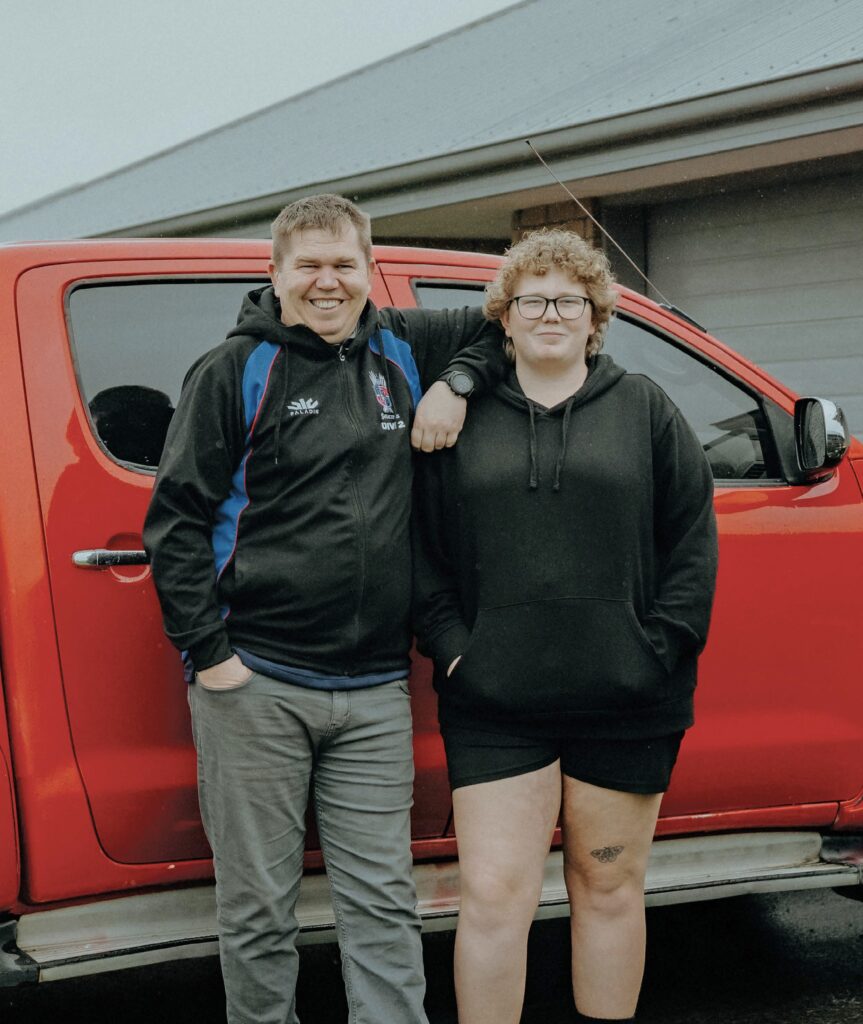
Ryan was the first person in his family to be born deaf, and his genetic heritage meant Emjai is also deaf, though her younger sister Peyton is not.
When Emjai received her first cochlear implant, the decision was philosophical as much as practical for Ryan and Nicki. He was reassured as the technology had evolved dramatically since his teenage years, with minimal invasiveness.
“The implant gives options,” Ryan says. “You can choose to engage with the hearing world, but at the end of the day, we’re still deaf.”
When the processor was switched on, Emjai heard her mother’s voice clearly for the first time. She turned toward Nicki and cried.
Her older sister Katie became a wonderful ally in her rehabilitation, constantly talking to Emjai and helping her speech develop rapidly. By the time Emjai started school, her progress exceeded all expectations.
The family’s fundraising efforts for Emjai’s second implant demonstrated the power of community support. In just four months, the Oamaru community raised $50,000.
Watching Emjai thrive, Nicki suggested Ryan reconsider getting a cochlear implant himself.
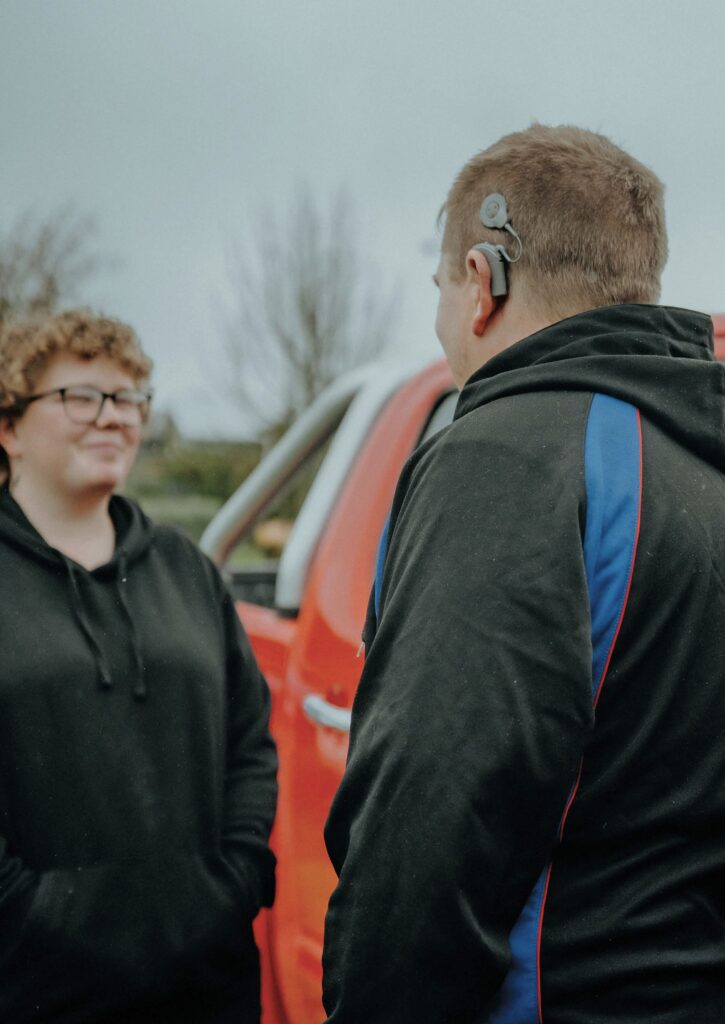
At 34, he took the leap.
The impact was immediate and profound. “The first couple of weeks, when I was sitting at home watching TV and I could hear this noise driving me nuts,” Ryan laughs. “It was a bird whistling outside the window. I’d never heard it before.”
More significantly, the implant opened professional doors. Previously limited to roles where he could minimise phone use, Ryan found himself confidently taking on management positions requiring extensive phone communication with customers.
From production supervisor at Kiwicare to operations coordinator at Transport Rangiora, his career trajectory shifted dramatically.
“I wouldn’t be in the role I’m in now if I didn’t have the cochlear implant. I know that for a fact.”
Now 19, Emjai loves cars and is beginning a career in the automotive industry.
She’s studying panel beating and mechanics at Ara, working toward her dream of running her own car restoration business. That ambition is backed by the achievement of being the top student in her Business Studies class at high school.
Emjai was awarded a study grant of $2,500 by the Southern Hearing Charitable Trust this year in recognition of her hard work.
She prefers older cars to newer ones. Emjai drives a 1990 Honda Integra, while her partner Cameron drives a late 1990s Toyota Corolla Levin. Her work experience at a classic car business in Rangiora allows her to combine her passion with practical skills.
“I started watching Formula One races with the family and thought they actually look quite cool to work on,” Emjai explains.
“I quite like the engine noise and the noises that come from them, how loud they can get.”
She’s pragmatic about her hearing. “Most of the time I tell people I’m deaf, just in case I miss hearing them in conversation.”
At school, she used Roger Pen technology to hear teachers in large open-plan classrooms.
Emjai has enjoyed playing netball since she was five and is a goal shoot. Interestingly, she says she plays better without her processors.
“I don’t have the coach or other players yelling at me to do different things,” she notes.
Both Ryan and Emjai are very appreciative of the support they have received from Southern Cochlear Implant Programme staff throughout their journey.
For Ryan, the message to other families considering cochlear implants is unequivocal. “Go for it. I reckon it’s the best thing ever.”
For Emjai, cochlear implants are simply part of who she is – a tool that helps her, but also gives her the choice for peaceful silence when she wants it, something her dad also relishes.