After a working life spent around noisy machinery, Steve had become accustomed to living with hearing difficulties. Now, following his cochlear implant journey with SCIP, the 70-year-old is enjoying greater clarity, more confidence in conversations and the simple everyday sounds he had been missing.
Steve began his working life in the panel beating trade after leaving high school, spending two-thirds of his working life in the industry. He later worked for a large truck rental and leasing company, meaning noise was a constant part of his working environment.
He was conscious of protecting his hearing from the beginning.
“Believe it or not, even in my first week of work I purchased a pair of earmuffs from NZ Safety (not supplied in those days).”

It was probably not until his 40s that Steve started to notice some hearing loss, although the tinnitus was particularly noticeable. As the years passed, the effects of his hearing difficulties became increasingly apparent.
His children had to repeat themselves, his wife became frustrated, and during committee meetings and school board discussions, Steve found himself turning his head towards his better ear to hear more clearly.
He was fitted with his first pair of hearing aids around the beginning of 2000, but initially struggled to wear them consistently. He would take them out when working around noise and often forget to put them back in.
That changed in early 2009, when his boss pointed out how much he was missing during group discussions because he wasn’t wearing his hearing aids regularly.
“From that day, the moment I get up till I go to bed I wear them all the time.”
Adjusting to a new way of hearing
Steve was referred for a cochlear implant at the beginning of 2025, and he was accepted following testing. He received his implant in June 2025.
The early days after switch-on were an interesting experience. As he had anticipated, the sounds were very different from what he was used to, and it took time to adjust.
“It was very electronic and heady, and the excessive noise got to me.”
Steve understood that progress would take patience and effort. The SCIP team had prepared him for the adjustment period, encouraging him to be patient and keep up with his rehabilitation exercises.
Looking back, he says the results have made a real difference to his everyday life – being able to follow conversations more easily has helped him feel more involved, rather than sitting on the outside.
“Clarity, understanding, less repeating, being part of everyday discussions, hearing at church services, a dinner party, understanding and picking up most of my grandchildren (11) with their various pitches.”
He particularly enjoys rediscovering the everyday sounds he remembers from years gone by, from his grandchildren playing to the indicator in his car.
Living rurally has also brought a new challenge: the constant chirping of birds, which Steve admits has taken some getting used to.
Steve had a receiver added to his sound processor, combining the cochlear implant with an acoustic hearing aid component. He describes the combination as helping to round out the clarity and balance of the sound he hears.
Bringing cochlear implant users together
Steve and his wife, Mary, have also taken the initiative to start a monthly coffee group for local cochlear implant users.
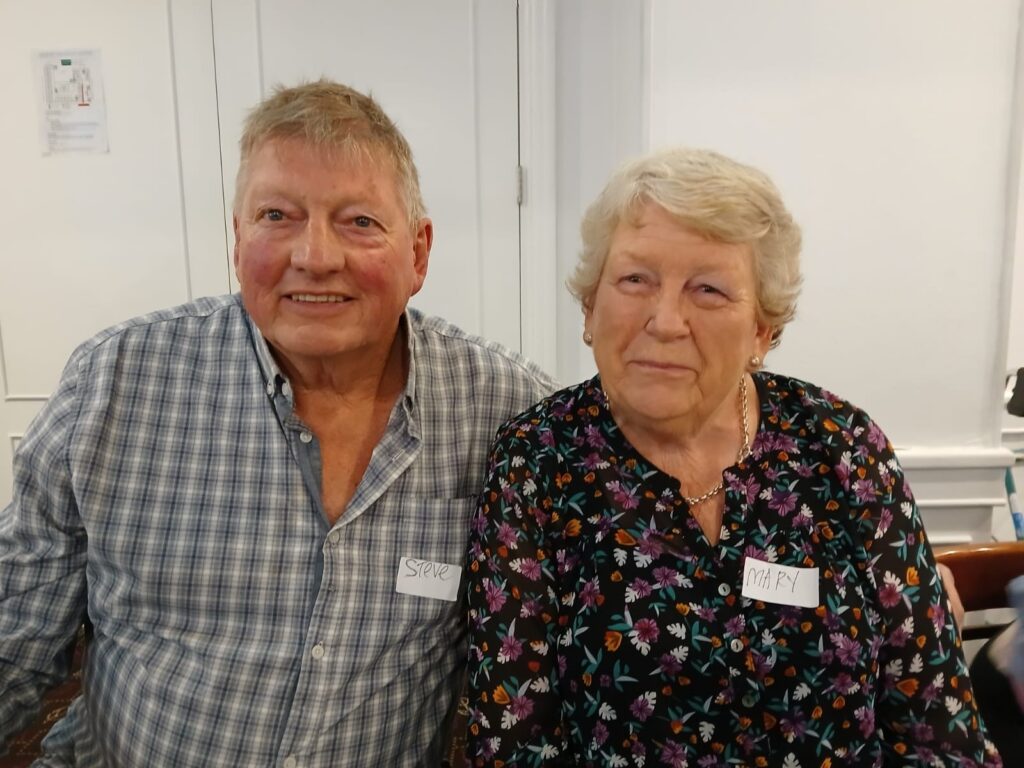
Steve and his wife Mary
After attending a regional cochlear implant user support gathering in October 2025, the couple found themselves talking with other recipients. Some approached them, and the conversations inspired an idea.
“We ended up talking to cochlear recipients and some of them approached us and we thought why not start a support (coffee) group.”
The group provides an opportunity for people to share their experiences and frustrations, offer advice and learn from those who have been using cochlear implants for longer.
Steve’s advice to anyone considering a cochlear implant is straightforward.
“Go for it. It is a life changer for me, but you need a good support person with plenty of patience as there is a lot of homework which was critical for me to keep up.”
Having experienced the difference himself, Steve hopes others understand that adjusting to a cochlear implant takes time, commitment and support, but the benefits can be significant.
“It’s improved my quality of life. Being able to hear in most environments is very reassuring to me instead of sitting on the outside.”