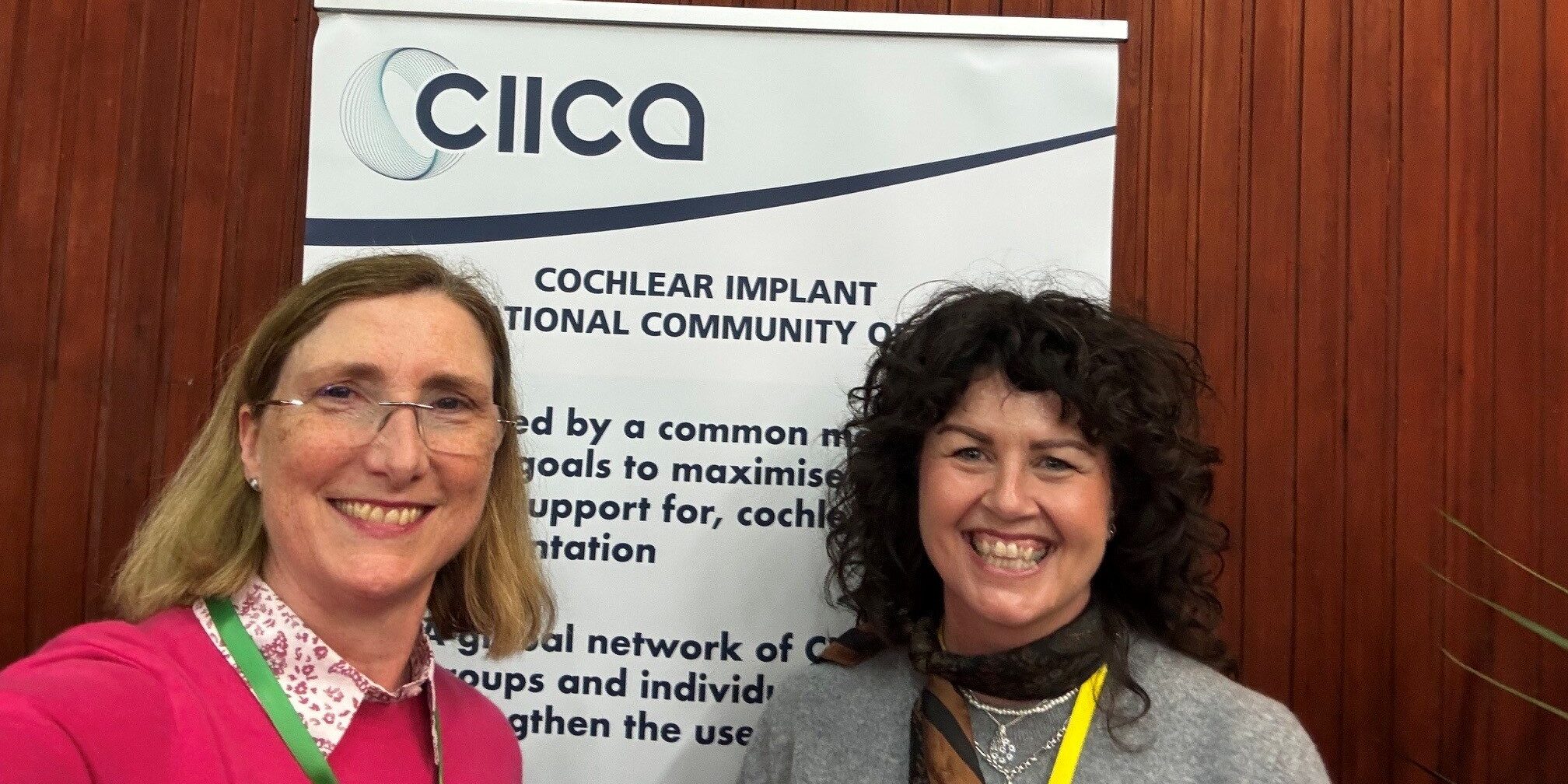
Rehabilitationist Nikki Cleine represented SCIP at the Cochlear Implant International Community of Action (CIICA) conference in Brussels last week (22–23 October 2026), joining 117 delegates from 29 countries across five continents.
The conference brought together 35 cochlear implant users, alongside researchers, clinicians and advocates, with a shared goal of improving access to cochlear implant technology and ensuring people receive sustainable, lifelong support.
A key focus of the conference was bringing lived experience and scientific knowledge together. Rather than separating participants into different streams or concurrent sessions, everyone attended the same presentations, creating opportunities for cochlear implant users and hearing health professionals to learn from one another and consider important issues from different perspectives.
Delegates were also encouraged to share their thoughts, questions and reflections throughout the event through a dedicated ‘Talking Wall’, providing another opportunity for discussion and collaboration.
Presentations explored a range of topics, including advances in cochlear implant knowledge and awareness, ongoing barriers to accessing services – particularly in low- and middle-income countries – and opportunities for greater international collaboration to improve outcomes for cochlear implant users.
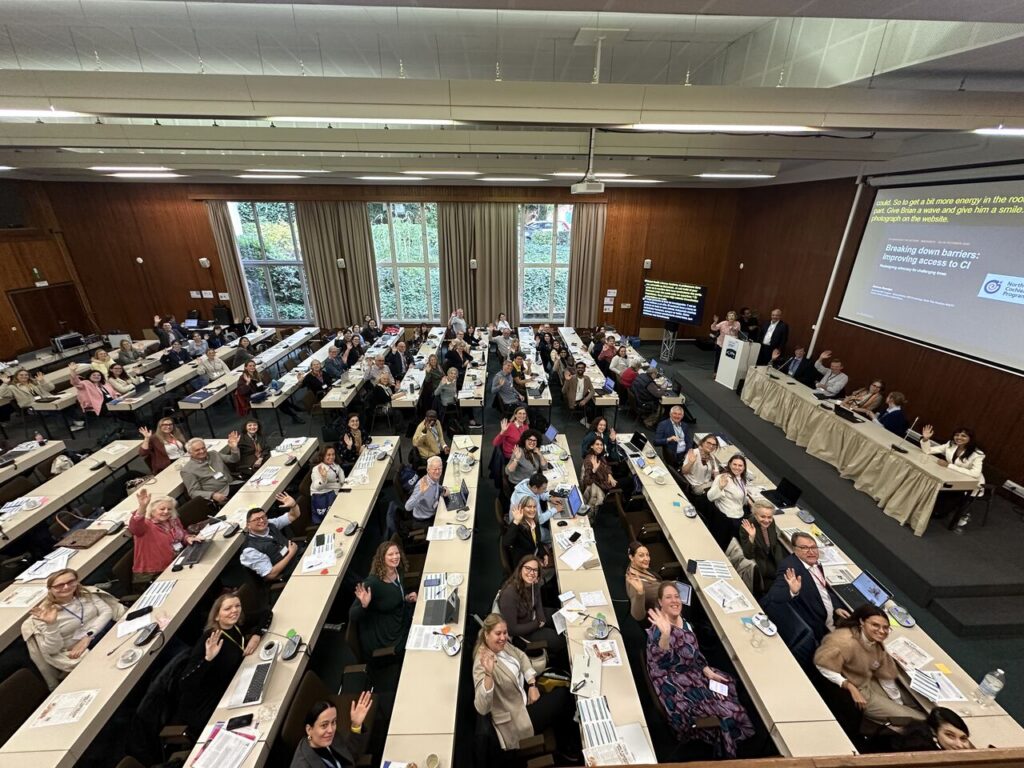
All delegates
Accessibility built into the conference experience
Alongside the discussions about improving access to cochlear implant services, the conference also demonstrated how accessibility can be put into practice through thoughtful event planning.
A range of technologies and tools helped ensure delegates could access presentations and participate in discussions in ways that worked for them.
These included:
- Live captioning in five languages, supporting delegates from different countries and language backgrounds to follow presentations.
- Sennheiser Wi-Fi assisted listening technology, allowing delegates to stream presentation audio directly to compatible hearing aids and cochlear implants through an app on their phones.
- Slido live audience polling, providing an accessible way for delegates to share their views and contribute in real time.
- Text to Talk at the welcome reception, where delegates could scan a QR code to access live speech-to-text transcription, translated into their preferred language and displayed on their phones.
Together, these features helped create an inclusive environment where accessibility was considered an essential part of the event, rather than an afterthought.
For a conference bringing together cochlear implant users, clinicians, researchers and advocates from around the world, it was an encouraging example of how technology can help remove barriers to participation. It also highlighted the importance of making accessibility a priority from the very beginning of event planning, rather than treating it as an optional extra.
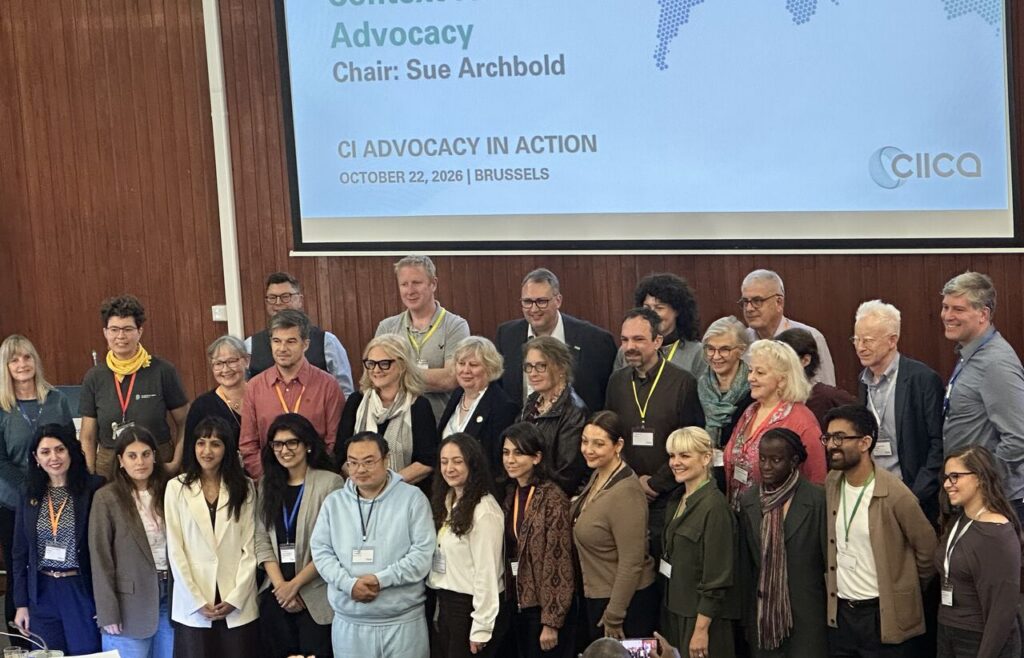
CIICA 2026 CI users
Bringing different perspectives together
Reflecting on the experience, Nikki said the conference offered a unique opportunity to bring together different perspectives and build connections across the international cochlear implant community.
“As both a cochlear implant user and a hearing health professional, the opportunity to learn from others, share experiences and connect with people from around the world in such a unique environment was one of the most enriching experiences of my professional career.”
The conference reinforced the importance of ensuring cochlear implant users are part of conversations that help shape the future of cochlear implant care, alongside the clinicians, researchers and organisations working in the field.
It also offered a practical reminder that creating more inclusive experiences starts with making accessibility a priority.
By bringing lived experience and professional expertise together, CIICA continues to support a shared international goal: making cochlear implant care more accessible, equitable and sustainable for people around the world.
Main picture: Nikki and Dr Cathy Birman ENT from Sydney, Australia