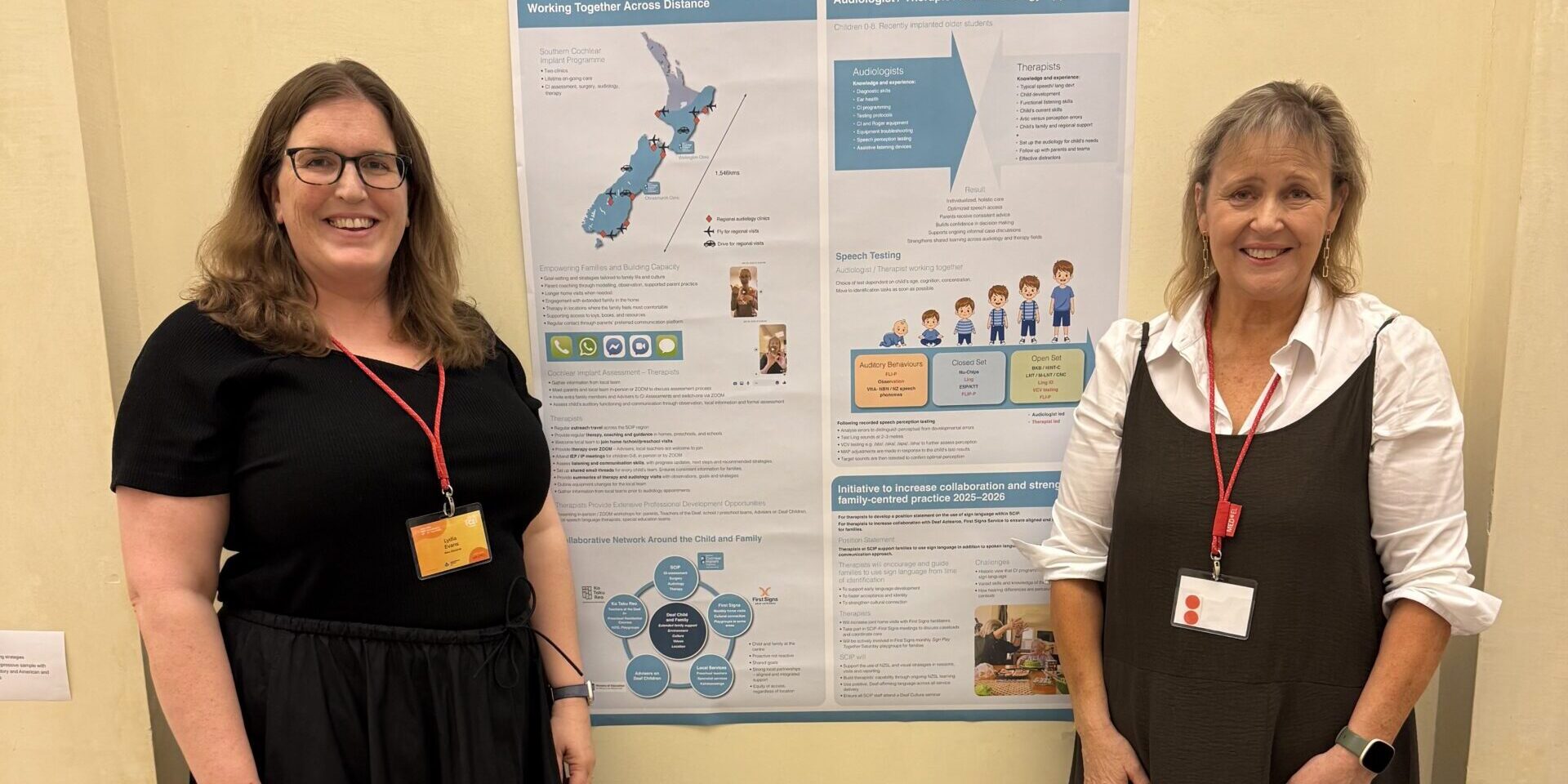
Joanne Lake and Lydia Evans represented SCIP at FCEI 2026 in Austria, sharing local expertise while bringing home new insights from global leaders in family-centred early intervention.
Southern Cochlear Implant Programme (SCIP) Lead Paediatric Habilitationist Joanne Lake and Paediatric Habilitationist Lydia Evans have returned from Austria after attending the 7th International Conference on Family-Centred Early Intervention for Children Who Are Deaf or Hard of Hearing (FCEI 2026).
Held in Bad Ischl, Austria, from 10–12 June, the biennial conference brought together more than 300 professionals, researchers, Deaf and hard of hearing adults, parent leaders and educators from around the world to explore the latest developments in family-centred early intervention. The 2026 conference theme, Shaping Tomorrow: Ideas, Innovations and Challenges, focused on innovative practice, ever changing technology, research and the future of support for Deaf and hard of hearing (DHH) children and their families.
Throughout the three-day event, Joanne and Lydia attended keynote presentations, workshops and panel discussions, while also sharing two posters and one oral presentation highlighting New Zealand’s work in early intervention for DHH children and families.
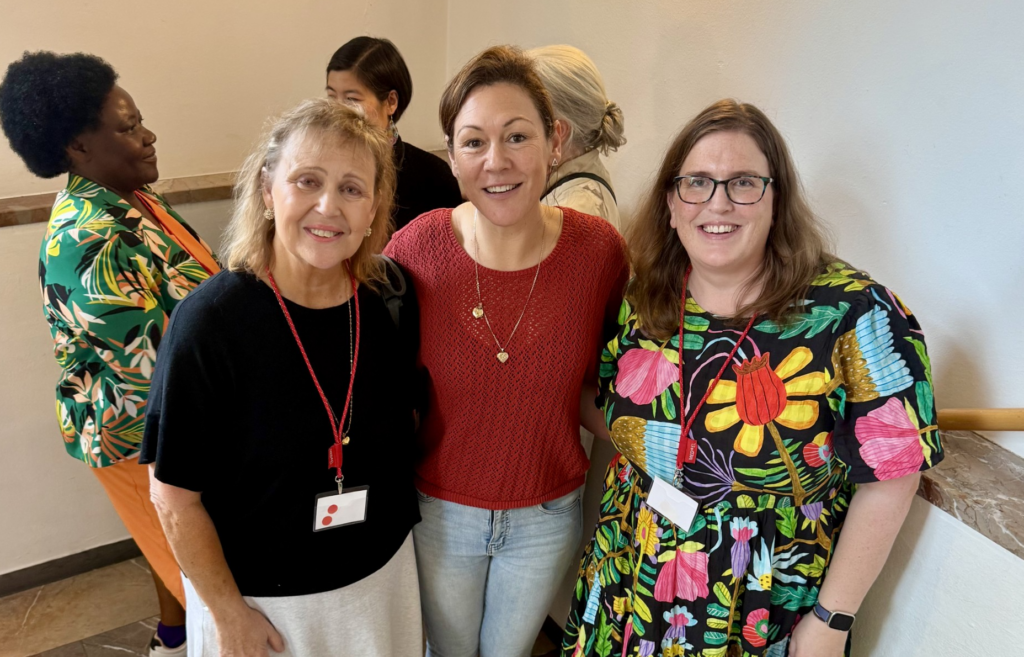
Joanne Lake, Willa Hand from Auckland Parents of Deaf Children (APODC) and Lydia Evans
Learning from Global Perspectives
One of the conference’s pre-conference workshops focused on research and best practice in family-centred early intervention for children with unilateral hearing loss (UHL) and single-sided deafness.
The 3-hour workshop highlighted the significant differences in support services available across countries and reinforced the importance of tailoring support to the individual needs of children and families.
Research presented during the workshop explored the impact of unilateral hearing loss on listening in noise, sound localisation, fatigue, language development, school participation and social confidence.
A strong message was that unilateral hearing loss is not always ‘mild’ simply because one ear has typical hearing,” Joanne said. “Support should be flexible, evidence-informed and family-centred, with ongoing monitoring as children’s listening needs change over time.”
Other presentations explored topics including considerations around families receiving genetic testing and the ethical implications of gene therapy.
Parent and Deaf Voices at the Centre
A strong theme throughout the conference was the importance of lived experience and authentic partnerships with families.
Numerous workshops focused on parent self-efficacy and parent leadership within early intervention services. One standout session featured the United Kingdom’s Community Connector pilot programme, where trained parent leaders support and advocate alongside families as they navigate services within their communities. The Connector roles are funded through extensive fundraising.
“One of the highlights was hearing directly from parents,” Lydia said. “Their stories reinforced SCIP’s commitment to working as a team and the importance of ensuring families are true partners in decision-making.”
Delegates also heard from a panel of DHH teenagers and young adults, who shared honest reflections about education, communication and navigating everyday life.
Presentations on Deaf Gain challenged deficit-based thinking. Australian research was presented which involved a number of parents from Australia and NZ.
Practical Ideas for Supporting Families
The final day included presentations on multidisciplinary care, accessibility technology, artificial intelligence and social-emotional development.
A keynote presentation explored the concept of the ‘Medical Home’ and how professionals and agencies can work more effectively alongside families of children with complex needs. The presenter noted that ‘Medical Home’, a term commonly used in the US, was not really an appropriate name, and that ‘Family Centred Care’ would be a better fit. The research and practical ideas for supporting collaboration across large teams, while keeping families at the centre, was very valuable.
A popular session showcased the accessibility features available on everyday smartphones, providing practical ideas that can support communication and independence. This was of particular relevance to our slightly older children and teenagers.
Celebrating New Zealand’s Strengths
The conference provided valuable opportunities to learn from international research and practice. Hearing others describe their systems and programmes also highlighted the strengths of our own services, including First Signs and the strong collaboration that exists across our DHH early intervention sector.
The pair are looking forward to sharing their learnings with colleagues and exploring how new ideas from around the world could be adapted to benefit New Zealand children and families.
“Connecting with professionals from different countries who work in roles similar to ours was incredibly valuable,” Lydia said. “We’ve come home inspired, with new ideas, new connections and a renewed appreciation for the family-centred approach that sits at the heart of what we do.”