Whether he’s playing soccer, performing kapa haka or taking to the stage, Christian isn’t afraid to give something new a go.

Christian
Whether he’s playing soccer, performing kapa haka or taking to the stage, Christian isn’t afraid to give something new a go.
For Ross, receiving a cochlear implant in his eighties has brought some unexpected discoveries. But perhaps the most remarkable change has been rediscovering the joy of conversation, making new friends and reconnecting with his wife, Hilary.

After a working life spent around noisy machinery, Stephen had become accustomed to living with hearing difficulties. Now, following his cochlear implant journey with SCIP, the 70-year-old is enjoying greater clarity, more confidence in conversations and the simple everyday sounds he had been missing.

After 12 years away from the stage, Michelle Holland thought her acting days were behind her. But when the opportunity came along to audition for Shirley Valentine, she decided it was time to take a chance.

Nicole Berry has worked at Puke Ariki – New Plymouth’s library, museum and information centre – for 20 years. She loves crafting, runs adult craft nights through the library and is currently expecting her first child with fiancé Beren.

After more than 30 years of volunteering in the UK and New Zealand with Guides and Scouts Aotearoa, Sophia Sturgess was recognised with the Leadership Dame Patsy Reddy Award for Diversity and Inclusion at Scouts Aotearoa’s Leadership Weekend in August 2025 – and it was a moment that caught her off guard.
At the ceremony, organisers had introduced a live transcription tablet to help make presentations more accessible. Sophia, who received a cochlear implant through SCIP 14 years ago, was using the technology to follow the sessions.
“As I became aware of the room going silent when my name appeared on the screen, I looked up and noticed a few people staring at me. I read it again twice to make sure. I was so speechless and shocked when I received the award.”
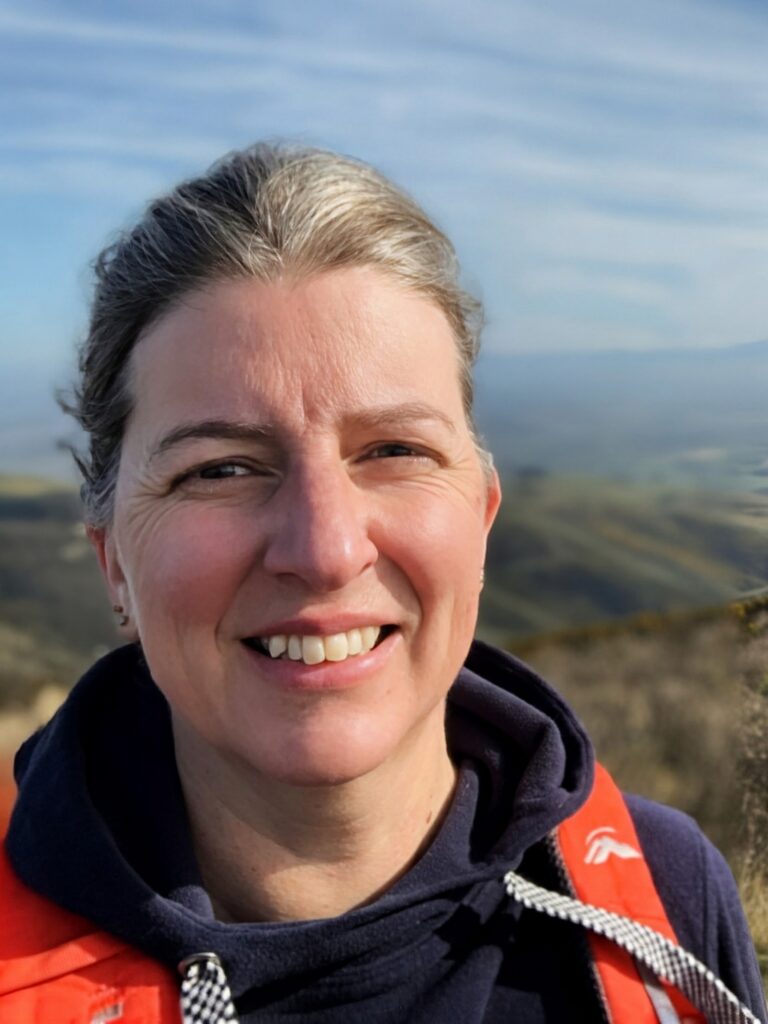
For Sophia, the award represented a lifelong commitment to creating opportunities for others, particularly people who have traditionally faced barriers to participation.
“I hope to inspire individuals with disabilities, including those who are deaf, to see that they can achieve their goals. Scouts Aotearoa gave me a chance to prove myself and remain open-minded about what I can accomplish despite my disabilities.”
Sophia began Guide’s leadership training at the age of 14 and today, she is Group Leader for her local Scout Group, where she supports leaders, volunteers and families while helping young people develop confidence, skills and lifelong friendships.
She says one of the most rewarding parts of leadership is seeing young people achieve something they once thought was beyond their reach.
“Watching them develop a new skill is truly rewarding; their expressions say a thousand words when they accomplish what they initially thought was impossible.”
Sophia also enjoys seeing friendships grow among young people from many different schools and working alongside fellow leaders to find practical solutions that support every member of the group.
“We find ways to make things work for them. We have leaders who are neurodiverse, helping them to achieve the task, to ease their workload into more manageable tasks, and providing the necessary support within their teams so they can do it.”
Her passion for inclusion is deeply personal.
As a young adult, Sophia was told by one organisation that she couldn’t complete a course or sit exams because of her hearing impairment. It was a turning point that shaped the way she advocates for others today.
“I was devastated. Fortunately, I won my battle with that organisation. I completed the course, took the exams, and passed. I keep this certificate and medallion as a reminder of how far I’ve come.”
“This is why I am so proactive in ensuring that all youth, regardless of their diversity and disabilities, have the opportunity to be part of Scouting. We give them the chance to develop, to learn new things, to discover themselves, and to receive the support they need… Everyone deserves a chance.”
Long before becoming a Scout leader, Sophia’s own journey began with profound hearing loss.
Sophia’s hearing loss was identified shortly before her first birthday. At 13 months old, she received her first hearing aid, consisting of two small boxes worn on her chest.
Growing up in the United Kingdom, she attended mainstream schools before graduating with a Bachelor of Science (Honours) in Medical Biochemistry. In 2006, she moved to New Zealand with her young family.
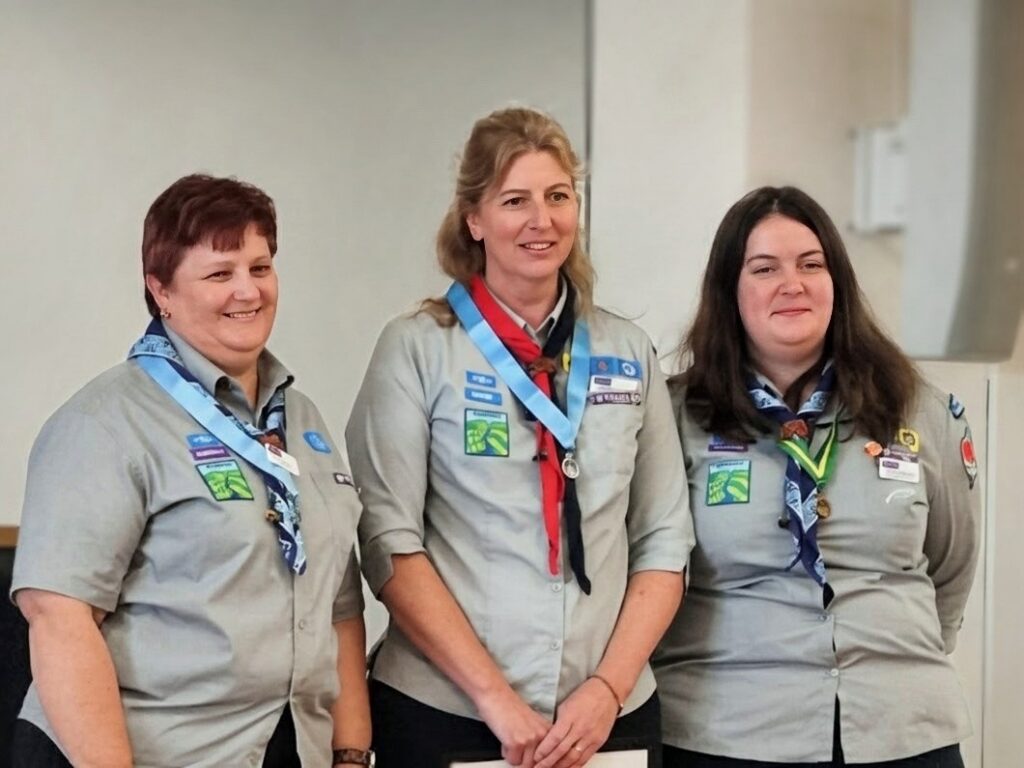 It was after the birth of her third child that an audiologist suggested a referral to SCIP to explore cochlear implantation.
Although she was initially offered a cochlear implant, the timing didn’t feel right. A few years later, when her youngest child was two and a half, she returned to SCIP.
“The next thing I knew, I was fast-tracked to the top of the list for the cochlear implant and was implanted within a few months.”
Receiving a cochlear implant opened up a whole new world of sound, but it also came with unexpected challenges.
“At the time I received my cochlear implant, I had four young children aged between 2 and a half and 8 years old. The most challenging part of my journey was re-learning to hear my children’s voices, as I discovered that everyone sounds different, with children having much higher pitches. Whereas with hearing aids, everyone speaks almost the same. It was frustrating for my children and I, but we got there in the end.”
As her brain adapted to new sounds, Sophia began noticing everyday moments she had never experienced before.
“One of my greatest joys has been hearing the chorus of birds along with my children. I now understand why my mother-in-law often commented on how beautiful it was to listen to them every time she came to New Zealand and stayed with us. Before my implant, I would just nod along, having no idea what she was talking about.”
“Listening to my children giggling in the other room, I used to miss it, having not been able to pick that up with hearing aids.”
She could also hear the wheeze of an asthma attack sooner, allowing her to give inhalers earlier and avoid unnecessary trips to hospital.
Today, Sophia says her hearing helps her fulfil her leadership role in Scouting.
“I can effectively listen and communicate with leaders and parents, in order to support the youth, and attend trainings and meetings comfortably. I can offer more than I have in the past and help break down the barriers of disability within the community.”
Life has presented further challenges in recent years. While tramping near Akaroa with six Scouts and a fellow leader, Sophia suffered a fall that broke her leg in three places. She watched her Scouts put their training into practice, staying calm as they worked with another leader to get help from the Air Rescue Team. “I am incredibly proud of my Scouts for staying calm and focused during the situation. They did everything further than I expected, even carrying me on top of the three heavy rucksacks up the hill.”
As a result of the accident, Sophia was later diagnosed with Complex Regional Pain Syndrome (CRPS), and recovery has involved years of rehabilitation, learning to walk again and gradually returning to swimming.
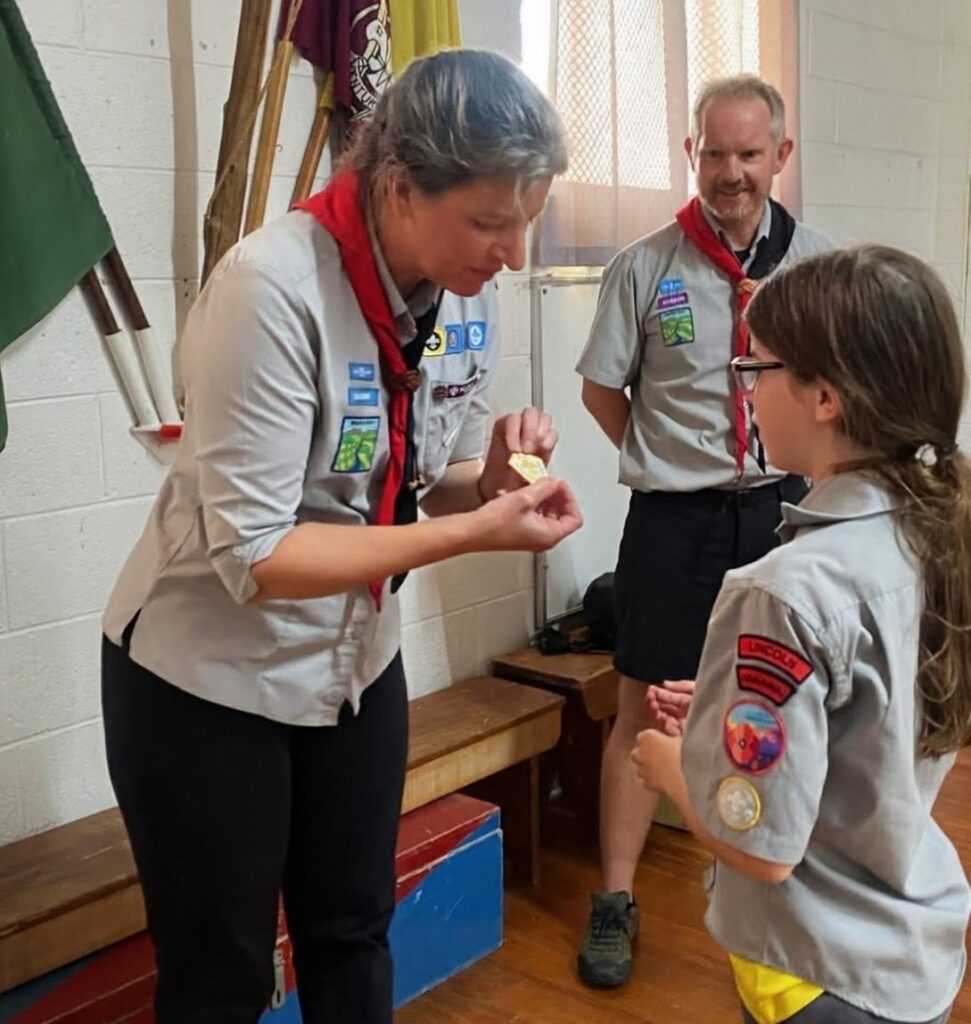
She has also continued participating in Canterbury West Coast Air Rescue’s Back to Base fundraising challenge, adapting her goals as her recovery has progressed and celebrating every milestone along the way.
Now, after three years of recovery, Sophia is preparing for another new chapter.
“Since I cannot resume my previous job due to physical limitations, I will be searching for a new position, ideally in the disability field, as I enjoy helping others. I will also continue my Scouting activities, of course!”
Reflecting on the past 14 years, Sophia says her cochlear implant has helped her continue pursuing the things that matter most.
“It has allowed me to pursue my goals and cope with the challenges I have faced over the years. I am looking forward to the new challenges ahead of me.”
For anyone considering a cochlear implant, her message is one of encouragement and determination.
“Embrace challenges, stay open-minded, and avoid thinking, ‘I can’t do it.’ You can succeed; you just need to discover the right path to achieve your goals. Yes, society can be harsh and unkind, but you have the strength and will to push through. Connect with supportive individuals as you pursue your goals.”

For Juliet Gengenbach, opening her own bookstore has been a dream 15 years in the making. Now, XO Book Co is welcoming romance readers through its doors in Wellington CBD – and Juliet says she may never have been able to make that dream a reality without her cochlear implants.
Juliet was born without a hearing difference, but her hearing changed gradually over time.
“Losing my hearing was a bit like that famous quote about bankruptcy: it happened gradually, then all at once!”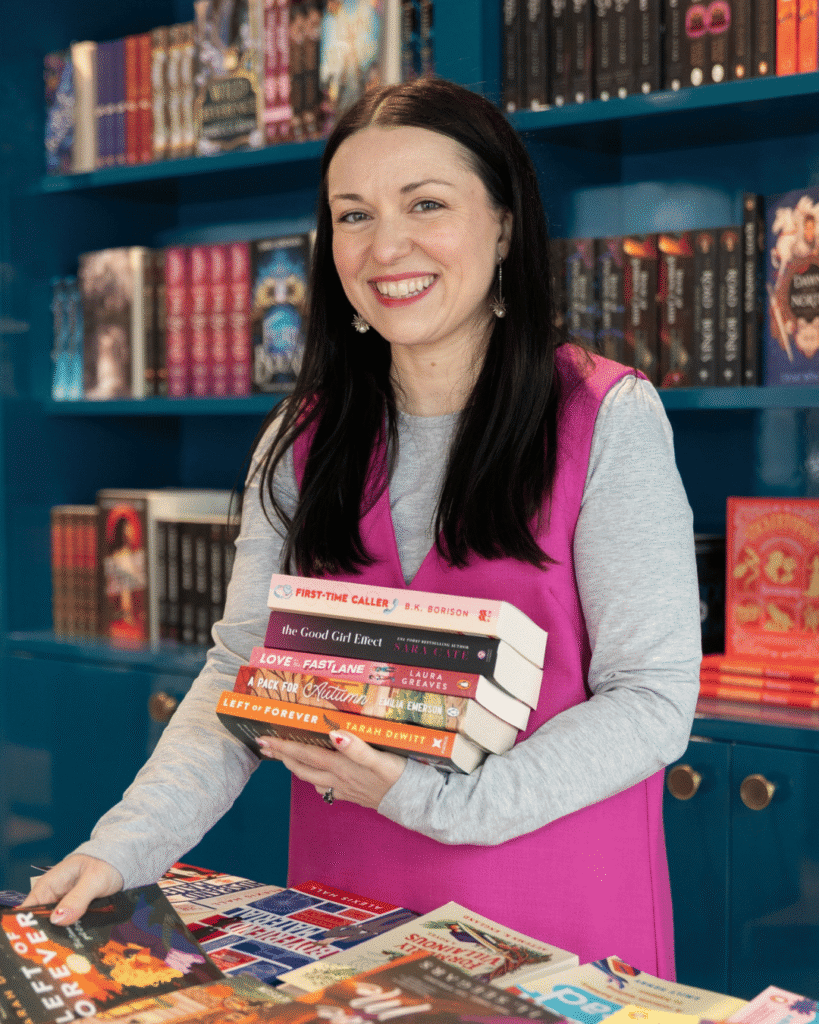
“I remember being able to hear birds and beeping alarms when I was younger, but I can’t pinpoint when exactly those went away. Then one day in 2023, I woke up and it seemed that all the hearing in my left ear was completely gone. Over the next few weeks I had the obvious-in-hindsight realisation that my hearing in both ears was actually pretty terrible, so I went to an audiologist about it, and he recommended cochlear implants for both ears.”
From seeing an audiologist to receiving her cochlear implants took around six months. At the time, Juliet was the primary caregiver to her toddler son.
Her memories of switch-on day remain particularly vivid, including the kindness and encouragement of the SCIP team.
“I remember the kindness of the staff at SCIP, and how it seemed that they really cared about my hearing, and about me as a person. I felt that they all were pulling for me to experience a fuller life by helping with my hearing.”
Hearing those first sounds was an emotional moment.
“I cried when I heard those first high-pitched tones on switch-on day; I couldn’t even remember the last time I had heard those sounds, and it gave me so much hope that I’d be able to hear birds–or, more importantly, my son–again.”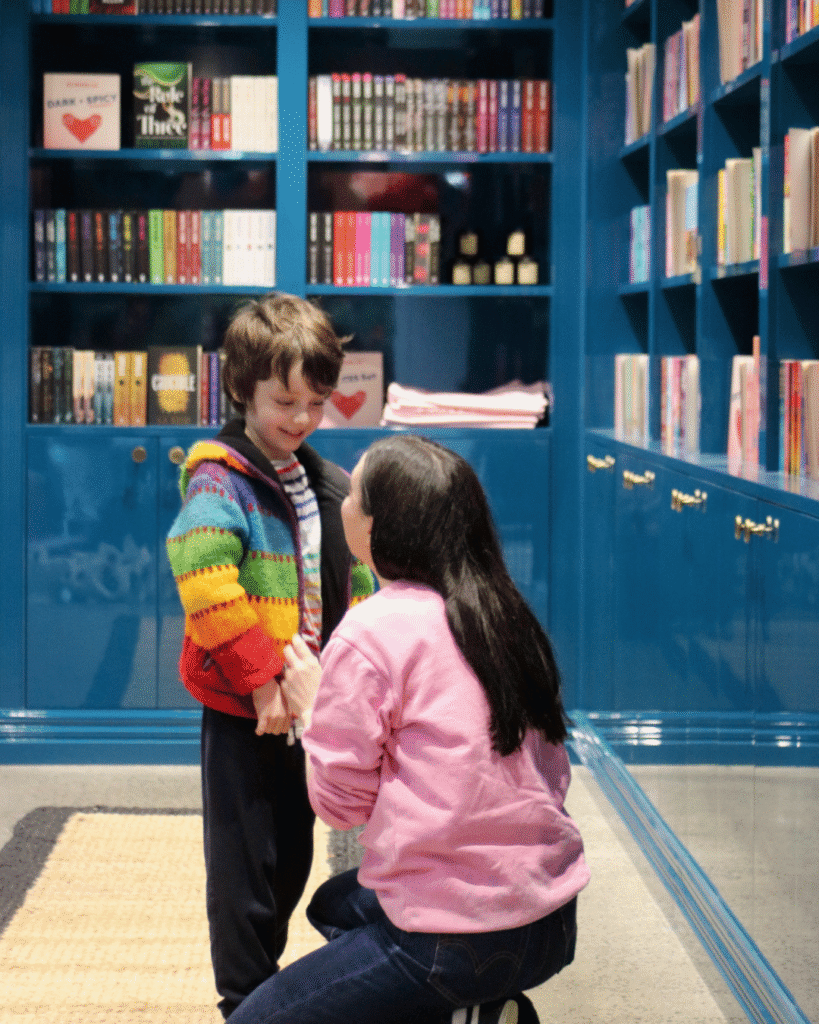
One of Juliet’s favourite things is now being able to chat with her son while they are in the car.
“Before my implants I was a silent passenger because road noise made it too hard for me to follow a conversation. Since I got my implants, I can talk to him from the front seat while he’s in the back. He is six now and he always has the most fascinating thoughts to share.”
Those conversations are particularly meaningful when Juliet remembers how difficult communication with her son could be before her implants.
“I remember during my very deaf stage, just before I got my implants, my son was two or three and learning to use the toilet on his own. One evening I was cooking dinner and he said he needed to go, and he wanted to go alone. After a few minutes, he hadn’t returned, so I went to check on him. He was thankfully fine, but when I got to him he was red in the face and had been bawling. ‘Where were you, mummy?’ he said. ‘I was calling you!’”
“It broke my heart that I hadn’t even heard him calling me from just down the hall. It was a really low moment for me, because then of course my mum brain thought up all the ways my hearing loss could lead to disaster for my little boy.”
Juliet is bilaterally implanted, with one cochlear implant privately funded and the other publicly funded. For her, the difference both implants have made extends far beyond simply hearing more sounds.
Her renewed ability to hear has played a significant role in Juliet’s professional life, particularly as she embarked on a dream she had been carrying for many years.
“I’ve been a romance reader since I was a teenager, and my love of reading led me to study and later work in publishing with a specific focus on romance. Around 15 years ago I had the idea to open a romance-specific bookshop, as romance books have been one of the top-selling genres in publishing for decades, though they are often overlooked at mainstream bookstores. This last Christmas I reached a place in my life when I felt it was finally time to chase my dream, and now here we are!”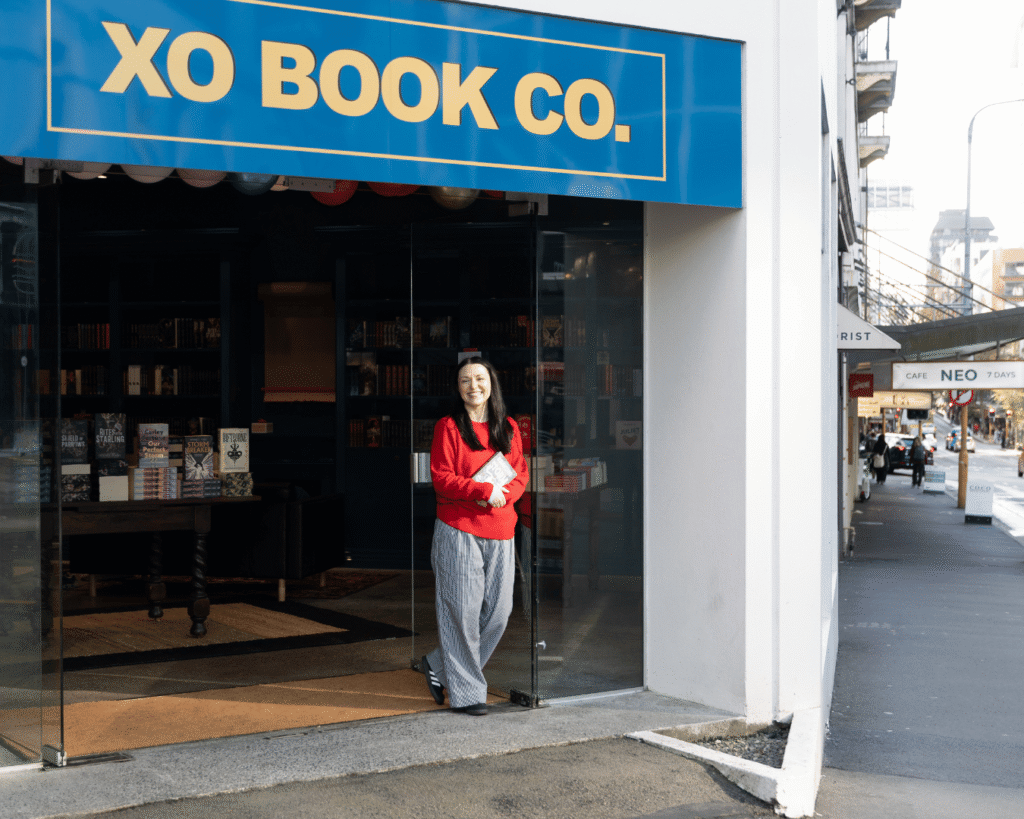
XO Book Co is the result – a dedicated space for romance readers where the genre and the people who love it can be celebrated. The response has been remarkable, with customers queuing down the block for six hours on opening day.
“It’s been amazing to see customers and our larger Wellington community respond to XO Book Co. I was absolutely honoured and humbled by the support from Wellington and the romance reading community.”
Juliet is also excited to see greater representation of deaf characters and cochlear implant users within the books she loves.
“I’ll recommend a few books with Deaf/deaf characters in fact! The Gravewood by Kelly Andrews features a female main character with cochlear implants. Her implants play a central role in this spooky vampire romance. There’s also an instalment of the very popular Ice Planet Barbarians series with a deaf main character with cochlear implants. Romance is an incredibly diverse genre and it’s always cool to read about characters like me getting a happily-ever-after.”
Every day in her bookstore brings another reminder of how much her cochlear implants have changed what is possible for her.
“Every day in my shop I run into some scenario that wouldn’t have been possible before my implants: answering phone calls from potential customers or suppliers, taking a customer’s contact information for our newsletter, or even just interacting with customers in a busy, noisy shop would have been torture if not outright impossible before my implants.”
“I quite simply could not have done this without my implants. I feel so incredibly lucky and grateful this technology exists. My implants have opened up the whole world to me.”
For anyone considering cochlear implants, Juliet is honest that the journey is not always easy – but says she has no regrets.
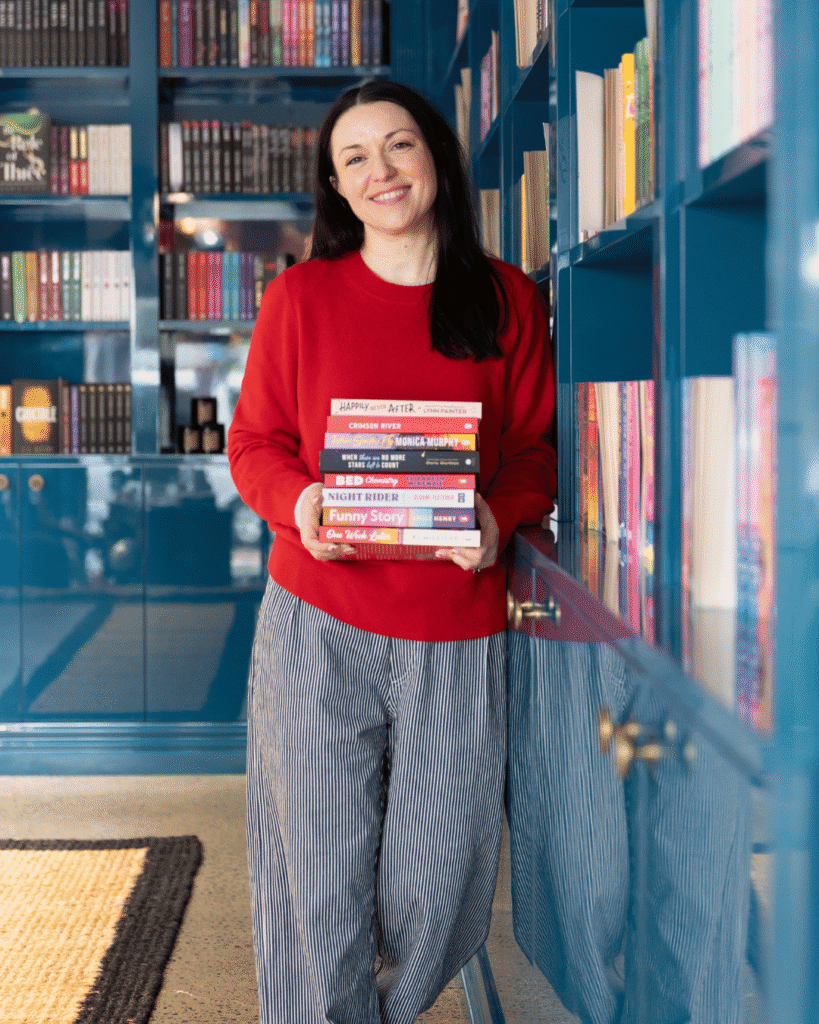 “My own experience with my implants has been nothing short of life-changing, but it certainly wasn’t always a smooth path. I have zero regrets about my implants and would do it all over again in a heartbeat.”
“I had so much support from my husband, and enthusiasm from my son (who brings me my implants out of the dryer every morning, so sweet). Get all the information from SCIP and your audiologists, and lean on your whanau and Your Way | Kia Roha to help you. Change may come slowly but it will come.”
You can find out more about Juliet’s bookshop here – XO Book Co.for more information.

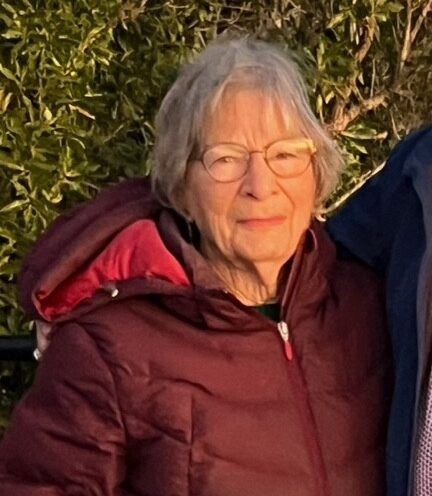
From becoming one of Australia’s first deaf university graduates to one of the first deaf women in Australia to complete a parachute jump to circumnavigating Australia by boat — Nancy Gibb has achieved more in one lifetime than most people could imagine, all while navigating severe hearing challenges.
Born in Sydney in 1940, Nancy lost her hearing at the age of six after contracting cerebrospinal meningitis.
“I was only six and don’t remember very much,” she says. “I was told years later that I was in a coma for a while with cerebrospinal meningitis and the doctors couldn’t clear the blockage via the usual route of lumbar puncture, so resorted to another route through a hole in my skull.”
While she remembers little about the illness itself, Nancy vividly recalls the challenges that followed.
“I do remember being taken to lipreading lessons frequently and I found them very boring, just wanted to go outside and play,” she says.
At the time, attitudes towards deafness were very different. Nancy’s local primary school refused to take her back after she lost her hearing, and her mother was advised to apply for an invalid pension and keep her at home.
Thankfully, her mother had other ideas.
“She was indefatigable in ensuring I participated in life in general,” Nancy says. “She encouraged me to be independent from a young age.”
Instead, after a short and isolating stint at the NSW Deaf and Dumb Institute as it was known at the time (now NextSense), Nancy’s parents enrolled her in a small private girls’ school.
“I do not remember ever being given any special treatment, teachers did not single me out – it was sort of a sink or swim situation in which I thrived and which has always stood me in good stead, especially when I eventually went to University.”
Growing up before cochlear implants, captioning and transcription apps, Nancy relied heavily on lipreading and visual communication and the occasional fingerspelling from her dad. Her mother would ‘write’ words on the palm of her hand.
Despite the barriers she faced, Nancy had ambitious goals from a young age. She desperately wanted to become a veterinarian but was rejected by the University of Sydney.
“Impossible, too dangerous,” she recalls being told. “Wouldn’t hear large animals, no stethoscope use.”
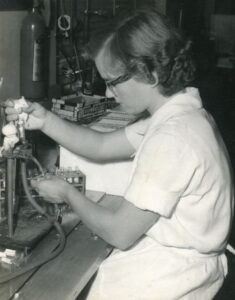
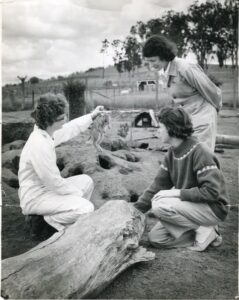
Instead, she pursued science through the newly established University of New South Wales while also working in a scientific laboratory and attending night classes to complete prerequisite subjects.
“Almost nobody including my schoolteachers thought I could do it,” she says. “But the University of NSW people were encouraging. My mother was tireless.”
Nancy worked four-and-a-half days a week in a scientific laboratory while studying Physics, Chemistry and Mathematics at night school, alongside beginning university biology papers.
The hard work paid off.
Nancy became the first completely deaf Australian woman to gain a university degree, graduating with a Bachelor of Science in 1962 before later completing a Masters in Animal Genetics at the University of New England.
University life came with significant challenges, particularly in lectures and group settings and Nancy often relied on self-directed study.
“I was a bit lonely at times,” she says. “But the other students accepted me and were happy to let me copy their lecture notes.”
“I’d then go to the library and try to find out more about whatever had been discussed that day.”
Following university, Nancy went on to build an extraordinary career in medical research, working with organisations including CSIRO, St Vincent’s Hospital, the Garvan Institute, Royal Brisbane Hospital and the University of Queensland. All without interpreters, captioning, workplace accommodations or communication support.
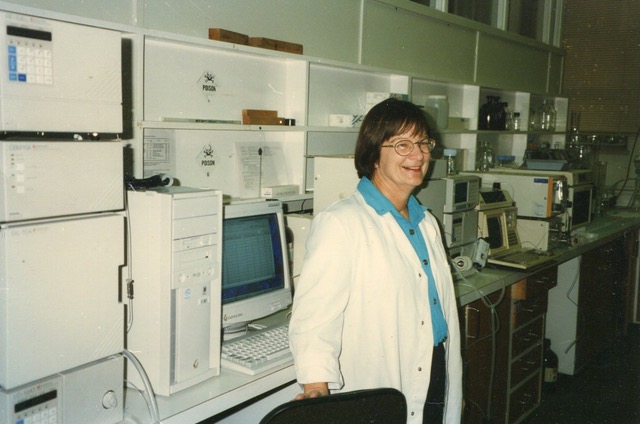 Nancy is grateful for the kindness of friends who helped fill in the details of the hearing world around her, and helped bridge the communication gaps that others often overlooked.
“Some special, considerate friends often told me quietly what they were hearing — noises in the background, someone talking too loud, gossip at work and so on,” Nancy says. “Just little things that made me more aware of the environment and what was going on.”
She particularly remembers a colleague from her first laboratory job and a close friend she travelled overseas with in her younger years.
“We spent three months with six other Aussie and Kiwi travellers touring Europe, hitchhiked up to the Orkney Islands in northern Scotland and had all sorts of adventures,” she says. “I remember my friend telling me our Scottish hosts’ little boy was talking about his ‘wee britches’ — things like that.”
Those small acts of inclusion helped Nancy stay connected to the world around her long before hearing technology offered additional support.
Alongside her career came a remarkable sense of adventure.
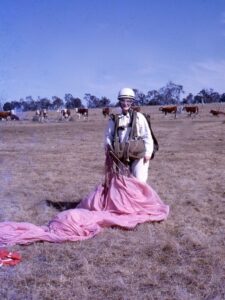
In 1963, Nancy was possibly the first deaf woman in Australia to complete a parachute jump. Later, together with her first husband Geoff Hoffmann, she bought and restored a former Broome pearling lugger – a large wooden sailing boat that was traditionally used to harvest pearl oysters and mother-of-pearl in Broome, Western Australia.
The couple later circumnavigated Australia with their young daughter Nicole between 1980 and 1981.
“My husband was fully hearing,” Nancy says. “We did have a series of home signs when sailing, especially as I had to work the engine. Occasionally he would write, especially if annoyed about something and wanting to make sure I understood.”
“When our little daughter aged 3-4 was angry she would grab a bit of paper and scribble on it and then present it to me.”
Tragedy struck in 1983 when Geoff died from melanoma, leaving Nancy to raise Nicole alone while continuing her scientific career.
When asked what she is most proud of when looking back on her hearing journey, Nancy says, “surviving in a hearing world. Completing University. Raising a daughter alone. Doing lots of things some people are afraid to do – with the exception of bungee jumping.”
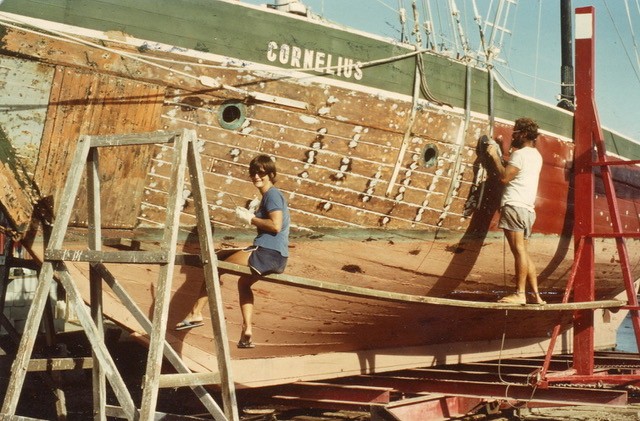
Working on the old Broome lugger
By the late 1980s, Nancy had also become heavily involved in advocacy work around captioning access, communication technology and relay services in Australia, helping pave the way for many of the accessibility services deaf and hard of hearing people rely on today.
Around the same time, she began considering something she had once thought impossible: a cochlear implant.
“In about 1980 I saw a magazine article about CIs,” she says. “It said they were unsuitable if there was ‘nerve damage’ and as I’d always been told I had nerve damage I thought – what a marvellous invention but not for me.”
Years later, while researching technology for deaf people, Nancy contacted Professor Bill Gibson in Sydney with questions about cochlear implants.
“I shall never forget the day a letter came back saying actually I was indeed a candidate for an implant.”
Nancy received her cochlear implant in 1988 after more than four decades of deafness.
Her expectations were modest.
“Very low – probably environmental sound only – which proved correct,” she says. “Basically, I had nothing to lose.”
Her first experiences with sound were overwhelming.
“One continual headache!” she says. “Mainly because in my eagerness I took ‘comfort level’ to mean the highest bearable level.”
Still, there were moments of joy and discovery.
“I walked around the hospital grounds trying to hear the sound of leaves rustling under my feet,” she says.
Over time, Nancy came to appreciate many sounds she had never experienced before.
“Birds, drums, music with a distinctive beat, waves on a beach, rain on a roof,” she says. “Rain on a roof was the first sound I identified with no visual clue.”
While speech understanding has remained limited, the cochlear implant has still had a meaningful impact on her life including “increased environmental awareness,” she says. “Conversation is also easier and my voice much improved.”

Her advice to others considering a cochlear implant is simple.
“Go for it,” she says. “Don’t be dismayed by all the horrid noises at first — or the silly stories about brain operations and the like.”
Now living in Christchurch with her husband Dave, who also has cochlear implants, Nancy continues to embrace life with the same determination and curiosity that has defined her journey from the beginning.
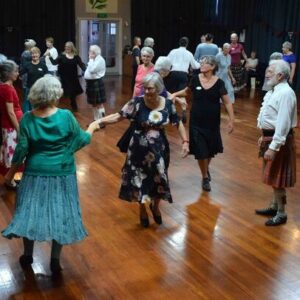
At 86 she remains a traveler, author, genealogist and Scottish country dancer — still proving, as she always has, that deafness was never going to define the limits of her life.
You can read more about Nancy’s adventures via her blog nancyvada.me

“It just feels like I’ve had it forever,” Murray Beck says about his cochlear implant, five years after surgery. “It’s only when I take it off that I think, ‘Oh, this ain’t so good.’ It’s definitely been a game changer.”

When we first told Benji Earl’s story in 2019, alongside that of his sister, Sadie, he was a bright, active 10-year-old from New Plymouth whose world had been opened up by bilateral cochlear implants.
